When Politics Is More Profitable Than Industry

“No country can progress if its politics is more profitable than its industries. In a country where those in government are richer than entrepreneurs, they manufacture poverty.” — Peter Obi, Nigerian politician I came across that line last year. It has not left me since. We are a long way from Nigeria. Yet Obi could just as easily have been describing us. When politics is more profitable than industry, the damage does not stay inside the halls of government. It reaches the barangay. It reaches the dinner table. And lately, it reaches the roofline of houses that flood every rainy season. The Water Keeps Rising, and So Do the Questions Since the flood control mess broke open, the typhoons have kept coming. The floods have

read more   →

Roadmap or Mask? Reading the Senate’s Empty Seats at SONA 2026

I have spent a good part of my professional life in political communication — crafting messages, reading audiences, and studying how moments like last Monday’s are built. So let me say this upfront, because critics who refuse to concede anything convince no one: the fifth SONA was, in places, genuinely well-crafted political communication. The question that matters is whether craft is the same thing as governance. It is not, and the evidence was sitting — or rather, not sitting — right there in the session hall. Start with the room, not the speech Before a single word was delivered, the Batasang Pambansa had already given its own address — though not the one the wide shots suggested. The hall itself was full, even festive: hundreds

read more   →
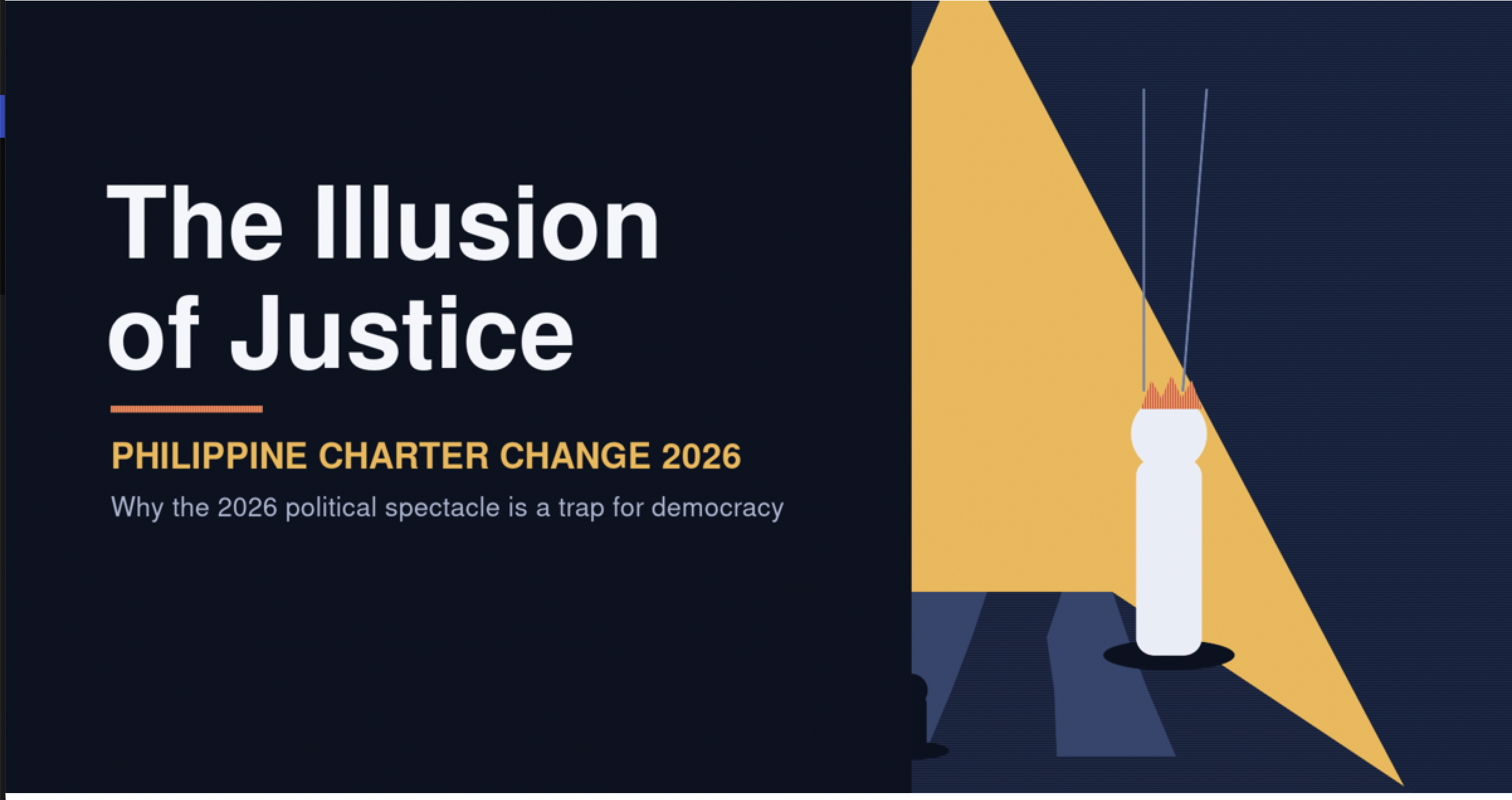
Illustration of a chessboard cleared of toppled pieces, with a single crowned king left standing under a spotlight and held up by puppet strings; headline reads "The Illusion of Justice — Philippine Charter Change 2026."

The Illusion of Justice: Why the 2026 Political Spectacle is a Trap for Philippine Democracy

The Bread and Circuses of the Present Right now, the Filipino public is being treated to the ultimate political bloodsport. In one corner of the world, a former president sits in an ICC detention facility in The Hague. Closer to home, a sitting Vice President is undergoing a grueling Senate impeachment trial that completely monopolizes every headline, tweet, and broadcast. To the casual observer, it looks like a long-overdue reckoning—the wheels of justice finally grinding down an empire. But we must look past the theater. While accountability for past or present misdeeds is necessary, we are blind if we do not see that the real story of 2026 is not the trials at all—it is Philippine Charter Change 2026, the quiet effort to use this

read more   →

The Trial Isn’t About the Money

I wrote a piece a while back about why the Pink and Yellow factions appear to be propping up an administration they spent years opposing. Moral decoupling, I called it — the cold discipline of separating a player’s flaws from their usefulness and running the two ledgers separately. Readers liked it. A few asked the obvious follow-up question, the one I’d ask if I were still in the room: fine, but what would you tell the other side? So let’s do that. Let’s sit in the other war room for a minute — the one defending Vice President Sara Duterte as her second impeachment trial opened last week — and read the same board from that chair. I’ll say this up front: neither the Vice

read more   →

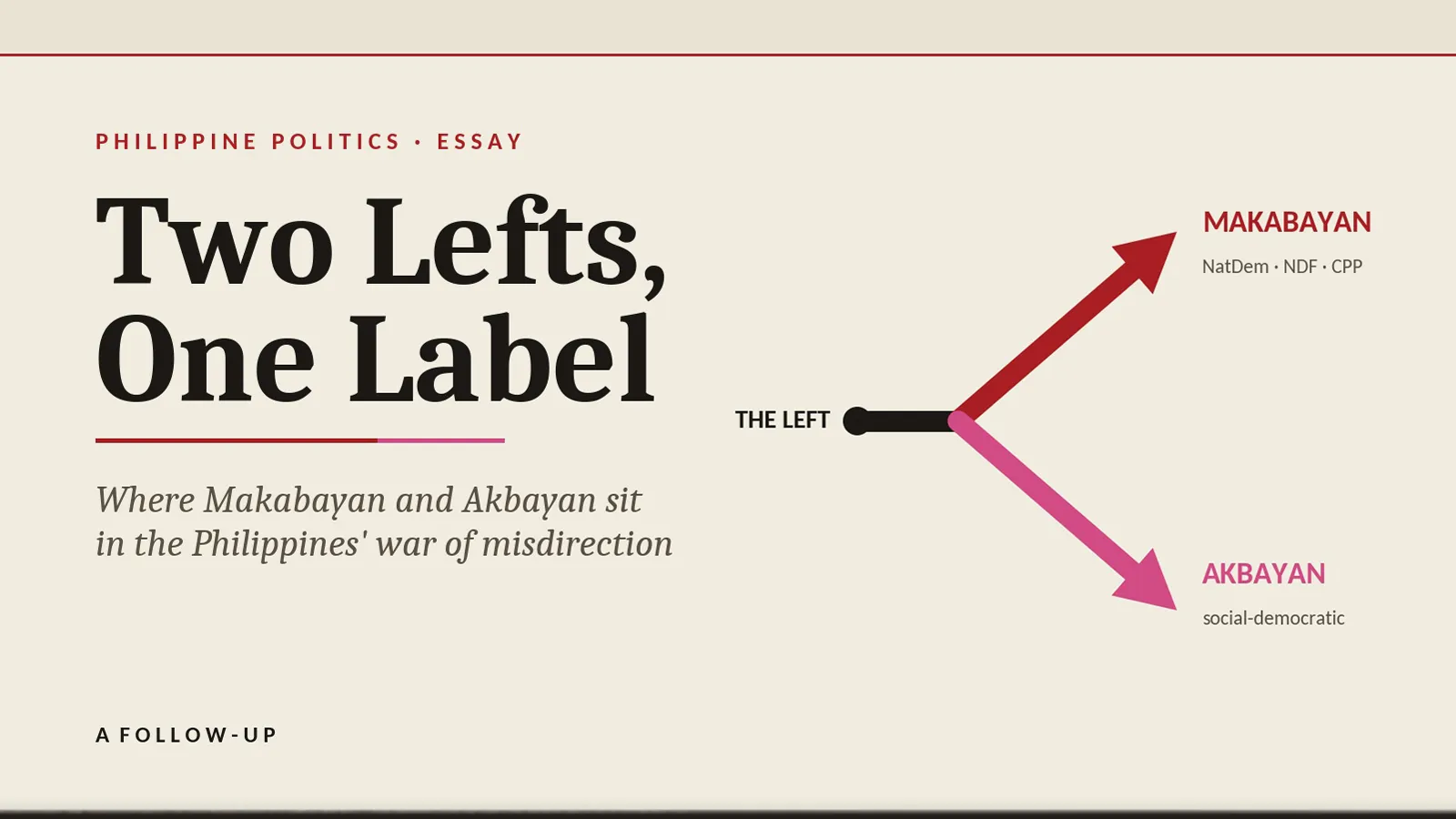
Two Lefts, One Label

Where the Makabayan bloc and the Akbayan bloc sit in the Philippines’ war of misdirection A follow-up to “Strategic Misdirection in Political Messaging” The first piece argued that a great deal of Philippine political messaging works not by lying outright but by pointing the audience at the wrong object — collapsing distinctions the speaker would rather you not see. Nowhere is that mechanism cleaner than in how the country talks about “the left.” The word does an enormous amount of quiet work. It flattens two rival traditions, born of a bitter split, into a single red silhouette. And that flattening is not an accident of shorthand; it is a political asset that different players spend and defend. So it is worth doing the un-collapsing. Where,

read more   →

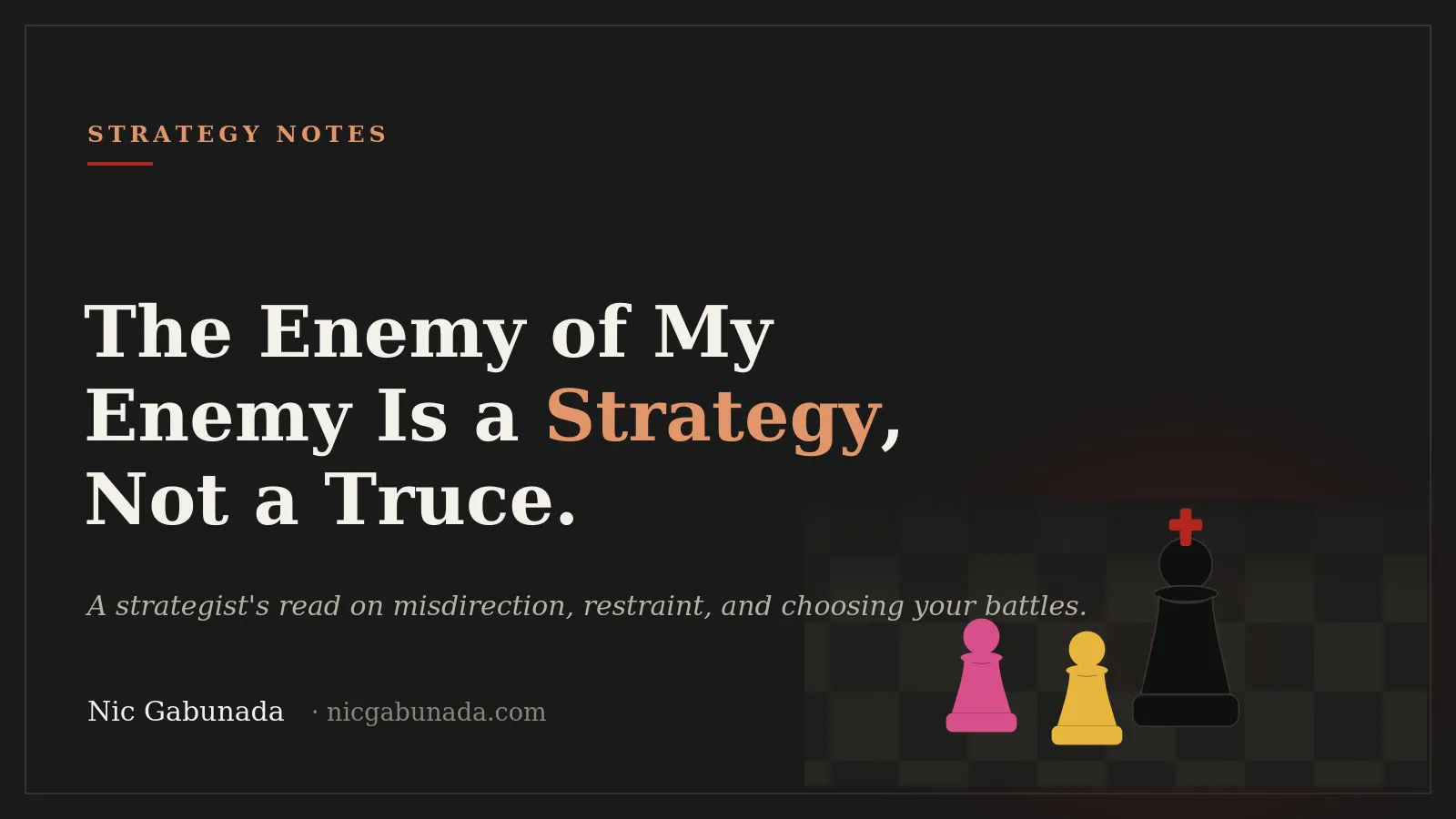
The Enemy of My Enemy Is a Strategy, Not a Truce

In every war room I’ve sat in, the hardest order to give a fired-up team isn’t “attack.” It’s “stand down.” Ask true believers to hold their fire while the other side is stumbling, and you get the same look every time — the one that asks whether you’ve lost your nerve. I hadn’t. And neither, I’d argue, have the Pinks and the Yellows. To the casual observer, the sight of the Pink and Yellow factions quietly holding up a shield for the Marcos administration looks like total ideological surrender. How, they ask, can the people who built their identity on opposing a Marcos restoration suddenly line up behind him? Someone coins “Uni-Pink,” a tidy betrayal narrative is born, and everyone nods along. If you’ve worked

read more   →

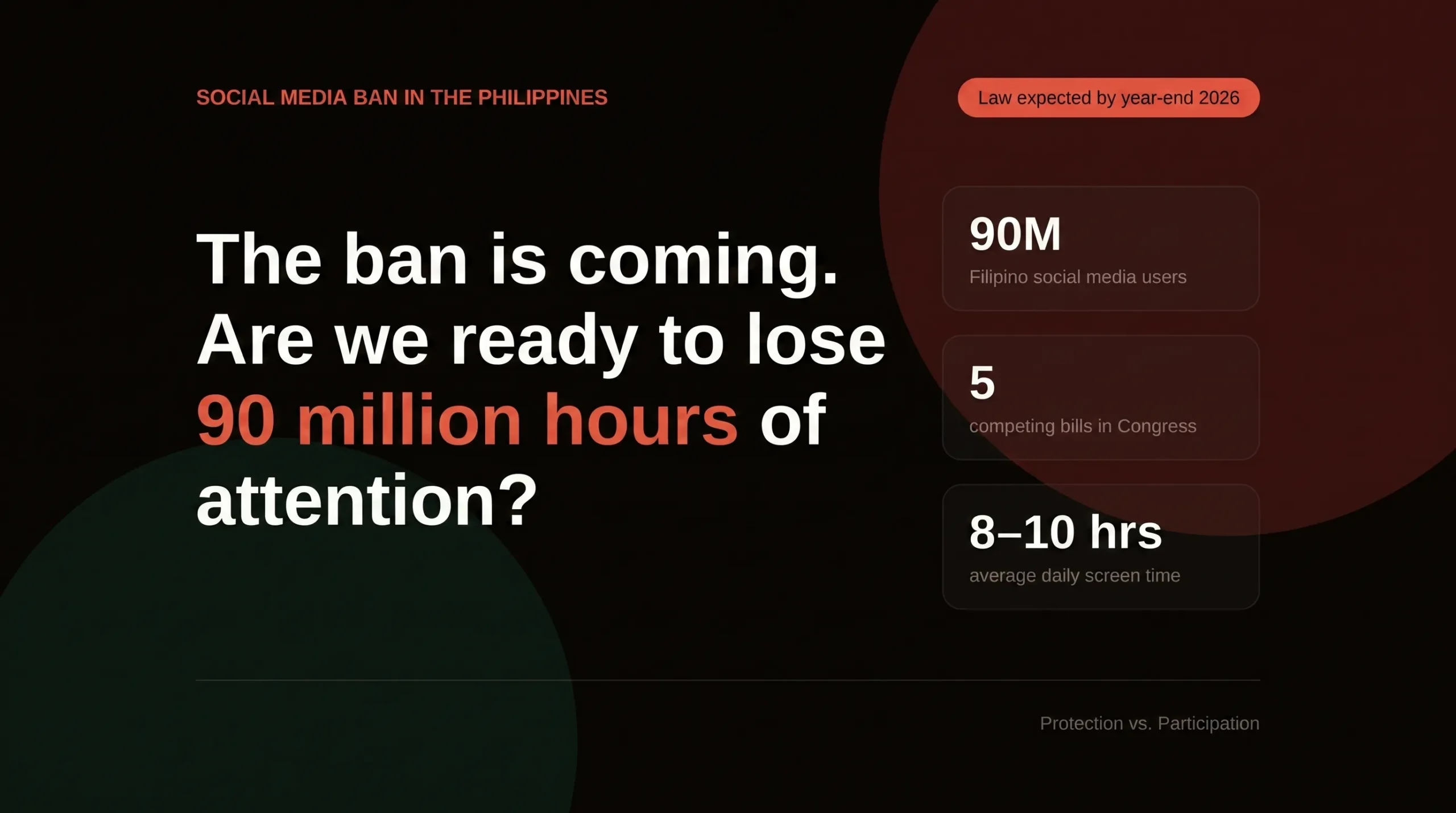
The Ban Is Coming. Are We Ready to Lose 90 Million Hours of Attention?

Here’s what should be keeping every marketer, PR lead, and digital strategist in this country up at night: the Philippines is not watching the UK’s under-16 social media ban from a safe distance. We are about to pass our own version of it. Digital Secretary Henry Aguda has said the government wants an online safety law enacted by the end of 2026, with a minimum age of 16 — even as industry players like TikTok lobby for a lower threshold. The specifics matter, because this isn’t one bill, it’s five. The Senate Committee on Public Information and Mass Media has already held hearings on a stack of competing proposals: Erwin Tulfo’s SB 595, which would bar children 12 and under outright and require verified parental

read more   →
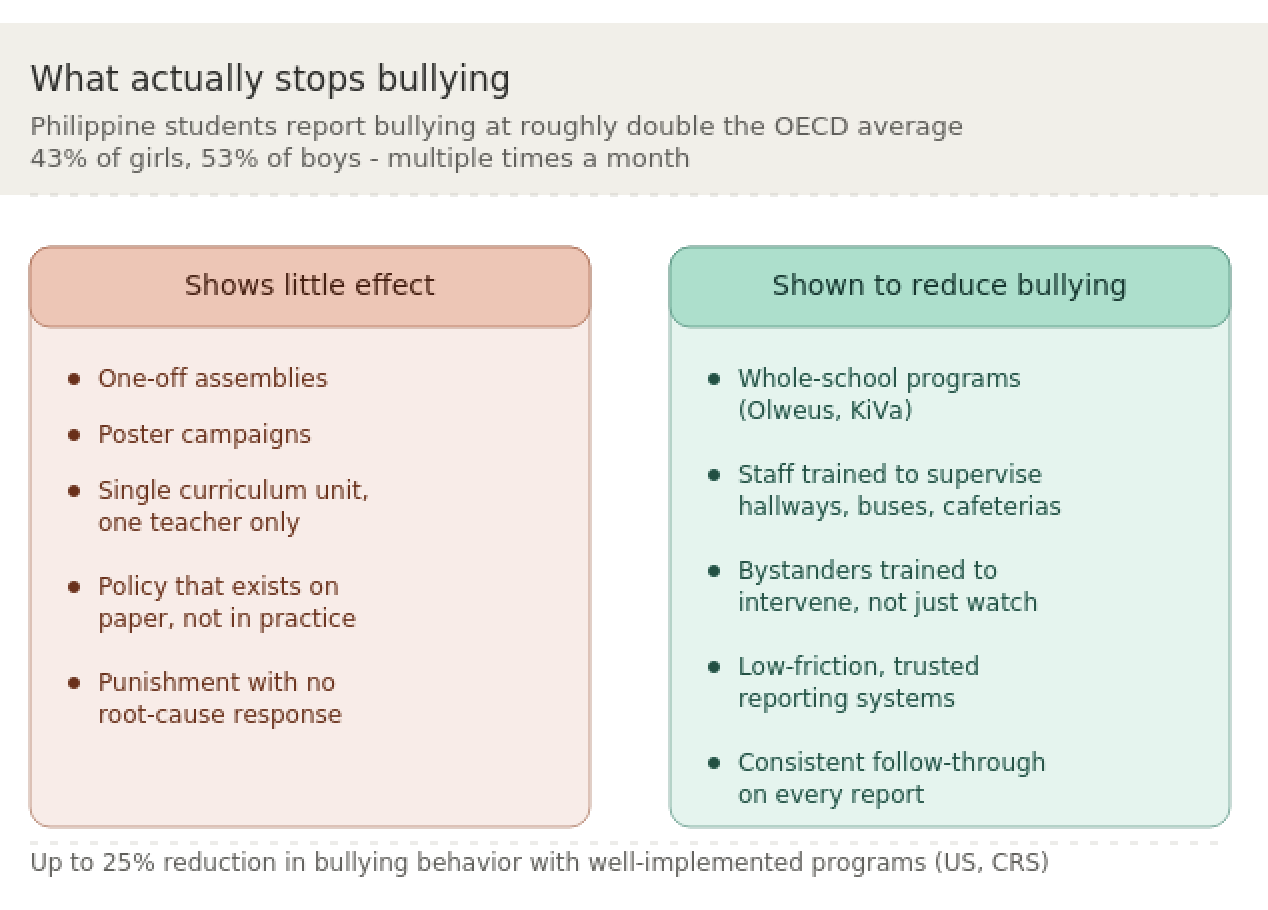
Infographic comparing bullying prevention approaches: one-off campaigns that show little effect versus whole-school programs shown to reduce bullying, with the statistic that Philippine students report bullying at roughly double the OECD average.

What Actually Stops Bullying: A Guide for Schools Beyond “Be Kind” Posters

In 2022, the OECD’s PISA survey asked 15-year-olds how often they get bullied. The global average came back at roughly one in five experiencing it multiple times a month. In the Philippines, that number was 43 percent of girls and 53 percent of boys — more than double the international rate. Researchers studying the data concluded the Philippines had effectively become the “bullying capital of the world.” That statistic sat in policy briefs and committee hearings for a couple of years. Then, on June 22, 2026, it stopped being an abstraction. Two students at San Jose National High School in Tacloban City opened fire on their classmates and told police they had been bullied. Four students died. Nine were wounded. The motive police cited was

read more   →
Infographic summarizing the Tacloban school shooting: three columns covering bullying response, firearm access, and the juvenile justice debate, with incident details for June 22, 2026.

Tacloban Wasn’t Supposed to Happen Here — That’s Exactly Why It Did

Tacloban Wasn’t Supposed to Happen Here — That’s Exactly Why It Did On a Monday morning that started like any other, students at San Jose National High School in Tacloban City were settling into class around 9:20 a.m. Two minutes later, police were already responding to gunfire. By the time it was over, three students were dead and 20 others wounded — a wounded count that has been revised upward more than once as treatment continued. Two of their classmates — 14 and 15 years old — were in police custody, charged with carrying out the attack themselves. This wasn’t a foreign news story playing out somewhere distant and unfamiliar. It happened at a public school with more than 1,500 students, in a city of

read more   →
A Filipino Flag symbolizing an independent country is shown against the background of a nation mired in poverty, corruption and flooding.

We Are Independent – But Are We Truly Free?

Every year, on June 12, we celebrate Independence Day and the moment our ancestors declared themselves free from foreign rule. We honor the bravery of those who fought, sacrificed, and dreamed of a nation that would govern itself. We remember the flag, the anthem, the heroes, and the long struggle that gave birth to the Republic. However, with all that has been happening with our country, I can’t help but pose this difficult question: Is the Philippines even truly free? Stupid question, you might think, as we have been an independent nation for 128 years now in 2026. Yet what does independence truly mean?  Independence was supposed to mean that the Filipino people would be free to determine their own future, protected by strong institutions,

read more   →