You Can’t Teach Old Dogs New Tricks

The saying, “You can’t teach an old dog new tricks,” is often used as an excuse to avoid new approaches or trying something different.  But in the dog world, this is not true as dogs of almost any age can still learn new tricks. Animal training experts confirm that dogs of nearly any age are capable of learning. The Dog Whisperer with Cesar Millan offer numerous examples. These examples show how even older dogs’ behaviors can be successfully modified.  It’s the human animal that invented this excuse for stopping to learn after a certain age.  “I’m too old to change“ –  is simply an excuse to avoid the hassle of leaning or experimenting with something new. I’ve seen this firsthand with staff members and officers

read more   →

Martin Romualdez Refuses ‘Scapegoat’ Role in Flood Control Scandal: A Political Rupture

When former House Speaker Ferdinand Martin Romualdez declared that he would “not allow myself to be turned into the scapegoat”, it wasn’t just a denial – it was a signal. “I will not go quietly, and I will not go alone. I will not be the fall guy for other people’s corruption.” This statement signals that this is no longer the quiet investigation into anomalous infrastructure projects. Philippine political scandals tend to follow a pattern: first, the revelations, and then the investigations. Next come the denials, and finally, the narrowing of responsibility to a handful of individuals. Some take the blame, maybe get some time in prison, all’s well that ends well.  But what we are seeing now disrupts that pattern. Escalating Blame Game: Romualdez,

read more   →

Domestic Turbulence: 7 Domestic Crises Unfolding Now

While the world’s eyes remain glued to the escalating US-Israel-Iran conflict, the Philippines is currently weathering its own perfect storm of domestic crises. From high-stakes legal showdowns at the Supreme Court to the dramatic fall of high-profile political figures, and an economy struggling for stability, the headlines at home are exhausting. The global situation is the backdrop, but for Filipinos, these political and economic headwinds have become the main event. Here is a detailed breakdown of the 7 major domestic crises currently unfolding: 1. Supreme Court Legal Showdown: Petitions vs. Unprogrammed Funds The Supreme Court has become a theater of high-stakes legal sparring. At the center of the storm are the petitions questioning the unprogrammed funds in the 2024, 2025, and 2026 national budgets.   During

read more   →

​Navigating the Hike: What the BSP Interest Rate Increase Means for You

Let’s talk about something hitting close to our wallets. The Bangko Sentral ng Pilipinas (BSP) recently hiked interest rates. While “rate hikes” might sound like dry financial jargon, this move directly impacts how we spend, save, and plan for the future. Why the change? ​This move primarily aims to tame inflation. In simpler terms, the BSP is working to stabilize the cost of goods and services, ensuring that the prices of our daily essentials don’t spiral out of control amidst global economic challenges. How does this affect you? ​It’s a balancing act for the economy, and the impact depends on your current financial goals: For Borrowers: If you’re planning to take out a loan for a new home or a car, you may notice higher interest

read more   →
To show that on thei HOly Week 2026, we pause to consider the ongoing war in the Middle East.and its unexpected impact on us.

Holy Week Reflections: Finding Empathy Amidst Global Conflict and Rising Prices

The scent of frankincense and the quiet hum of the Pabasa usually define our Holy Week. This year, however, those traditional reflections feel heavier. We pause to consider the ongoing war in the Middle East and its unexpected impact on us. The country traditionally pauses collectively during this time. Traffic softens, businesses slow, and families journey quietly.  Some return to their provinces, others visit churches for Visita Iglesia, and many simply choose stillness at home. Why the Middle East Conflict Hits Close to Home in the Philippines Today, the world’s troubles feel unusually close. The war in the Middle East is more than a distant headline; its shockwaves touch our daily lives. We feel this impact in several ways: News articles show fuel prices rising

read more   →

The Philippine Oil Crisis: Exposed, Unprepared, and Still Without a Long-Term Strategy

  The Philippines is reacting to the global oil shortage, not managing it. The crisis, triggered by the war in the Middle East, exposes how dangerously unprepared the country is. As former Finance Secretary Carlos Dominguez bluntly stated, solving an oil crisis is harder than fighting COVID-19. His quote sums up the difficulty: “you can quarantine a virus, but you cannot quarantine the global oil market.” The government’s current response suggests this is being treated as a temporary disruption, not a structural crisis. Unprepared and Knee-Deep: The Reactive Response The country was caught completely off-guard. Reports show that the Philippines has only about 45 days of fuel reserves. Given that we import nearly all of our oil, mostly from the Middle East, this limited reserve

read more   →

Beyond the Pump: Why Suspending Excise Tax on Fuel Is Not a Silver Bullet

We cannot think of wars, especially the currently ongoing conflict in Iran and the Middle East, as far removed from our daily lives. It’s true before, and it’s even more true now – this war that the US and Israel started against Iran is sending shockwaves all around the world. The thing is that this is not a war we chose, but we are already starting to feel its effects. It’s such a difficult time to be living right now. Daily war updates fills our social media  and broadcast news feeds.  The price of diesel and gasoline is slowly starting to go up. Jeepney drivers are earning only ₱56 after spending ₱1,200 pesos on diesel for the day. But President BBM suspended the fare hike,

read more   →

How Connections Shape the Philippine Economy: Nepotism and Political Patronage

Introduction In this blog we will  discuss the impact of nepotism and political patronage on the Philippine economy. This concludes our series on corruption’s impact on the economy. We trust this journey has been enlightening, prompting deeper reflection on the diverse manifestations of corruption and its influence on daily life in the Philippines.  Nepotism: A Hidden Type of Corruption There is a kind of corruption that many people often overlook because it doesn’t always look obviously corrupt. In fact, many Filipinos just accept it as a normal part of life. However, just like other types of corruption, it quietly affects the country’s economic future. Favouring Relatives and Friends in Business Helping relatives, friends, or people you know well doesn’t seem wrong. This practice is common

read more   →

Why “Kotong ” is Bad for the Economy

We’re almost at the end of this series on the economic effects of corruption. We’ve talked about different types of corruption, like customs fraud,   misused public funds, distortion of public spending, inflated project costs, and regulatory friction. But one type of corruption that hits us every day—and severely affects the economy—is corruption within law enforcement, especially among traffic enforcers and police. It’s a persistent problem the government is trying hard to fix. Its popular name is Kotong. Here is a breakdown of how this specific type of corruption, known as Kotong , hurts our economy and what we can do about it.   What is Kotong Culture and How Does it Work? Ask any Filipino driver, and they likely have a story about this kind

read more   →

EXPOSED: What the Impeachment Vote Means for Congressmen

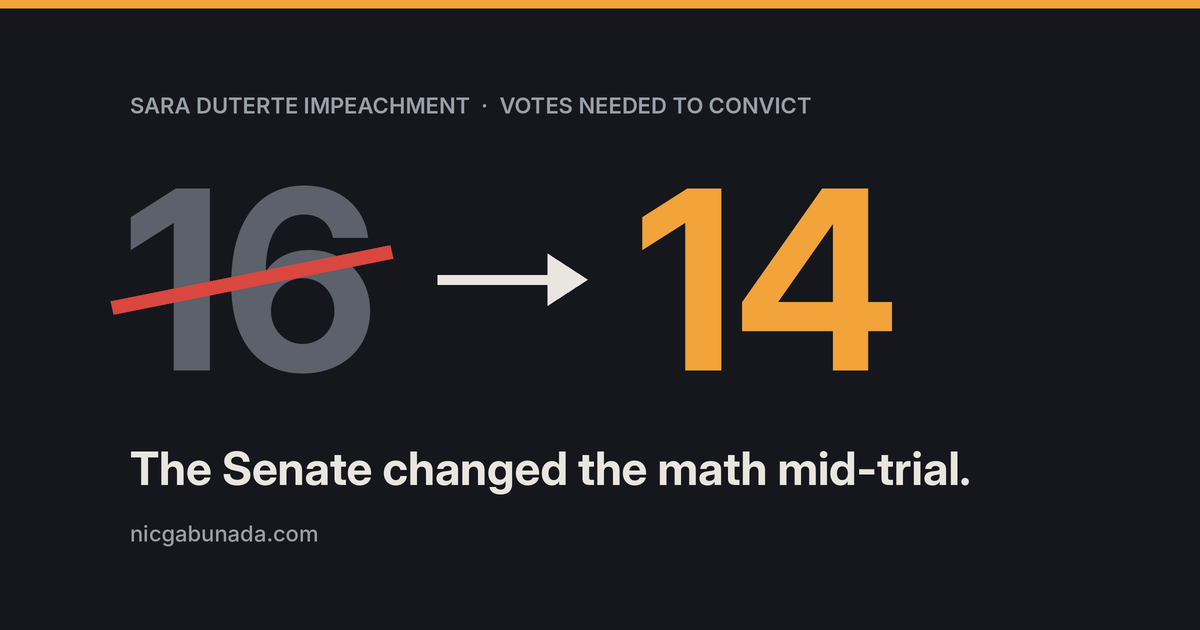
 In this blog post, we explore what the Sara Duterte impeachment vote means for congressmen and its implications for the current political landscape. (This is a follow-up piece to my blog on the structural consequences of  Sara Duterte’s early declaration that she will run for president in 2028.) For as long as I’ve been observing political campaigns, one pattern remains constant: when national timelines accelerate, the spotlight rarely stays where it began. When Sara Duterte declared her presidential candidacy, the impeachment effort ceased to be a contained institutional process. It entered the electoral arena. That shift has already been discussed. What has received less attention is the second movement of that shift. The spotlight has moved. It now rests on the House of Representatives. An

read more   →