The Double-Edged Feed: What Social Media Cost Us

Part 3 of 3 When I wrote about how free Facebook changed the campaign, I said the questions of social media ethics it raised were lengthy enough to deserve their own post. This is that post. I’ve put it off, if I’m honest, because it’s the hardest one to write. It’s easy to tell the story of a clever, cash-strapped campaign that found a new way to be heard. It’s harder to sit with what that new way also made possible — and to admit I was in the middle of it, not watching from the outside. I’m not writing this to absolve myself. I’m writing it because the same tools that let us compete did things I’m still weighing, years later. We are forced
read more   →

Feeling the Pulse: Was the Nation Ready for a Duterte Presidency?

Part 1 of 3 I remember back in 2014, Lito Banayo showed me a presentation prepared by a member of Mr. Bong Go’s staff. The objective was to test public reaction to a possible Duterte candidacy in the 2016 elections. I remember thinking it was an interesting proposition. Finally, a Mindanaon candidate who could truly represent the interests of the region! After what Lito showed me, I drew up a budget and told him that the right kind of exposure would cost ₱40 million. But we found ways to trim it down to eight — and here’s how we did it. It’s a story from more than a decade ago, but the principle behind it is one I’d still hand any strategist working today: the

read more   →

The Benevolent Dictator: Lessons from Political Campaigning in the Pre-Social Media Era

“You should get this man.” That’s what Boo Chanco — then vice president of the news division at ABS-CBN — said to Sergio “Serge” Osmeña III sometime in the 1990s, while pointing directly at me. I still don’t know if Boo was serious or just enjoying himself at my expense. But Serge took him at his word. That offhand introduction turned into one of the defining professional relationships of my career, one that would take me from the newsroom into the war rooms of some of the most consequential campaigns in modern Philippine political history — including the campaign that put Noynoy Aquino in Malacañang in 2010. Understand who Serge Osmeña III was before you understand what he taught me. Born December 13, 1943, he

read more   →

The ABS-CBN Shutdown, 4 Years Later: An Insider’s Honest Reckoning

It is now, four years after it happened, that I’ve finally made peace with what it means for one of the largest networks in the country to lose its franchise. ABS-CBN has, and continues to have, a place very dear to my heart. And I can’t say I was totally blindsided by the events of May 5, 2020. Unknown to most, the seeds were sown long before Mayor Digong ever thought about running for President — and I watched it happen from inside two worlds that were about to collide. How the ABS-CBN Franchise Fight Actually Started Here’s something most retrospectives on the ABS-CBN shutdown get wrong: this didn’t start with Duterte. The renewal process actually began under President Noynoy Aquino, all the way back

read more   →

The Manilay Mansion – A Glimpse to our Past in GenSan

Its been years since I had a chance to go around General Santos. In one of those trips, I happen to visit a mansion in Purok Malakas at the back of SaveMore.   The folks around call it the Manilay Mansion. I was informed that the Manilay Mansion  is a miniature version (although it is by no means small, as it is an actual mansion) of the original house in Batangas City. It is owned by the family of Warren Manilay, a businessman, who used to live in Batangas.  When Manilay and his family moved to General Santos City, he wanted to take a part of his home with him. He did not just bring furniture from his home – he brought his entire house!  

read more   →
Graphic for the final installment of the Edwin Espejo series on Philippine politics and the Duterte social media narrative.

Beyond the ‘Troll’ Label: A Reality Check for the Opposition

The anti-Duterte leaders and followers have falsely credited the ‘trolls’ of Duterte as being the reason why president Duterte’s popularity and trust rating remain in record fashion. But they failed to recognize their own deficiency.   That is where the opposition is failing in the first place.  It arrogates upon itself as guardian of morality and political righteousness.  In so doing, it effectively built a wall between itself and the people it purports to serve and defend. Collectively calling Duterte’s social media supporters as trolls is a serious disconnect.   Dismissing them as a bunch paid hacks is a middle class arrogance and display of intellectual snootiness. Edwin Espejo addresses this in his last of the seven series of articles originally published on Facebook in June/July

read more   →
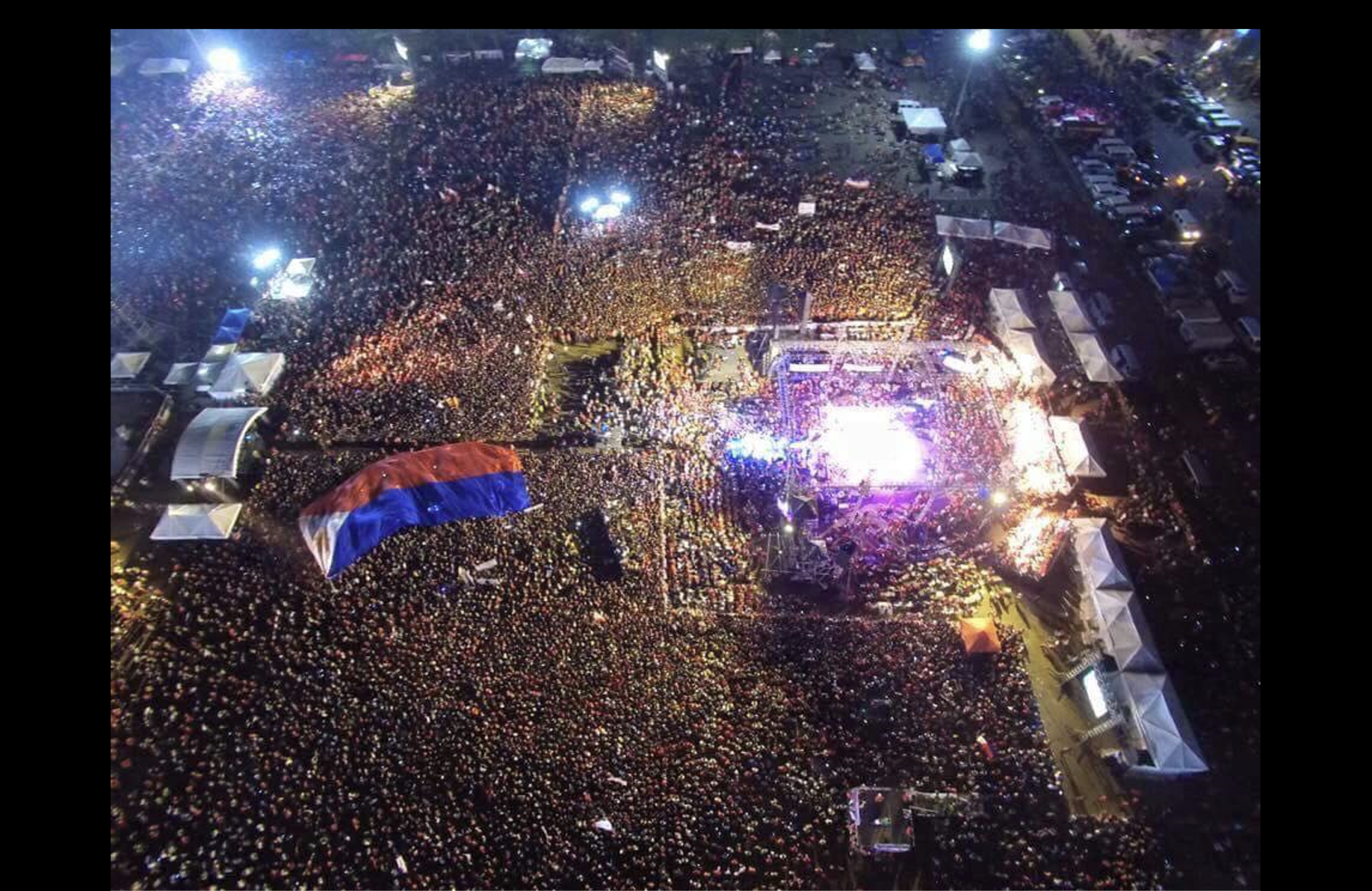
Aerial view of the massive Miting de Avance crowd for the 2016 Duterte-Cayetano campaign at Luneta Park in May 2016, demonstrating the scale of the organic support.

The Anatomy of a Disconnect: Why the ‘Troll’ Narrative Failed to Explain 2016

In this second installment of Edwin Espejo’s seven-part series, “Decapitating the ‘trolls’ of Duterte“,  he shifts the focus from the common myths to the actual mechanics of the 2016 Duterte campaign. Much of the public discourse has been obsessed with the narrative of a “troll army,” yet this framing consistently misses the most critical component: the genuine, organic connection between President Duterte’s authentic communication style and the Filipino public. In this post, Edwin breaks down how we actually facilitated the connections that allowed our messaging to resonate, and why the “troll” narrative—then and now—remains a convenient but fundamentally flawed explanation for what was, in reality, a powerful mass movement. Nic Gabunada ——————————————————————————————————————————– Decapitating the trolls of Duterte (Part 2 of a Series) Second of a

read more   →
Graphic titled "Espejo Series 1" featuring the headline "Decapitating the ‘trolls’ of Duterte: A 7-Part Retrospective" written by journalist Edwin Espejo.

Decapitating the ‘trolls’ of Duterte: A 7-Part Retrospective

Looking back at the noise and the narratives of the past few years, I’m resharing this seven-part series written by veteran journalist Edwin Espejo. In this series, Edwin meticulously details the period when the political opposition attempted to decapitate those of us behind President Duterte’s successful and innovative campaign—labeling us “trolls” in an effort to discredit the genuine movement that brought him to Malacañang. It’s a perspective worth revisiting, especially when looking at the disconnect that continues to play out in our political landscape today. First published on Facebook, here is the first part of that series. Nic Gabunada —————————————————————————————————————— Decapitating the ‘trolls’ of Duterte: A 7-Part Retrospective First of a series By Edwin Espejo (June 28, 2021) A known communication specialist during the 2016

read more   →

Death Don’t Live Here, Anymore – Davao’s Transformation from Murder City to one of Asia’s Most Liveable Cities

Killings, robberies, thefts, rapes, kidnappings, and even urban warfare between cops, soldiers, and communist guerillas; Davao City used to have all of that. Lawless would be the perfect word to describe the city in the 80s, and the foreign press even called it the “Murder Capital” of the Philippines.

This is a far cry from what Davao City is today. Resurgent contributor, Aurelio A. Pena, tells a tale of a city disentangled from its dark roots.

read more   →