A Homecoming Speech for the St. Michael’s College of Padada Golden Jubilee

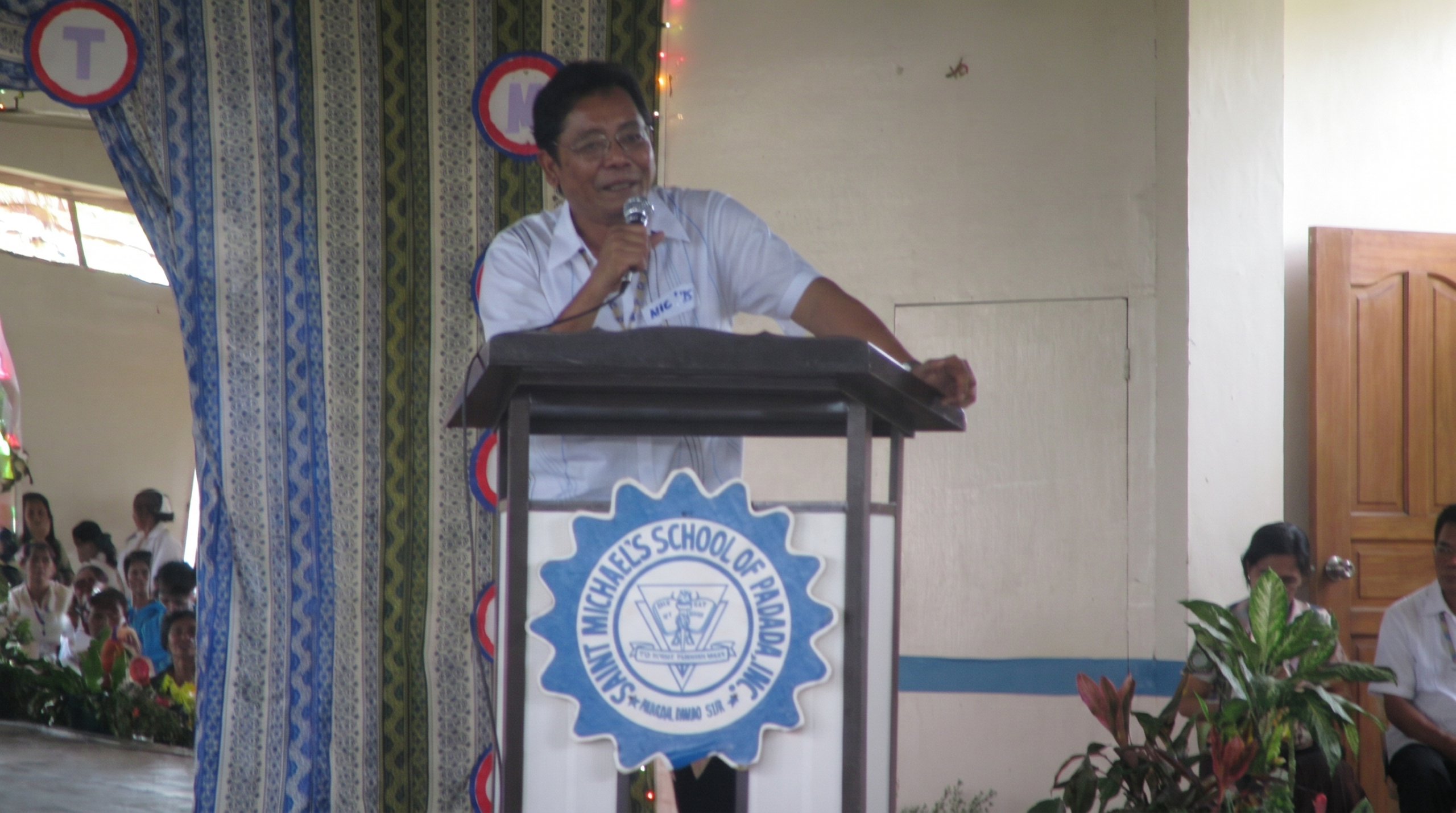
In October 2025, the High School Class of 1975 of St. Michael’s College of Padada will gather to celebrate a deeply special milestone: our Golden Jubilee. As I eagerly anticipate reuniting with batchmates—some of whom I haven’t seen since we proudly walked across the graduation stage half a century ago—I find myself looking back on our shared history and the timeless values our beloved alma mater instilled in us. To set the mood for our upcoming 50th-year celebration, I want to share a speech I delivered during another momentous occasion—the Golden Jubilee of the founding of our school. Through the years, our school has evolved from St. Michael’s Academy to St. Michael’s College,  and now, St. Michael’s School of Padada. Yet, the Michaelean spirit remains
read more   →

A Reason to Come Back Home: Building Padada’s First Library and Museum

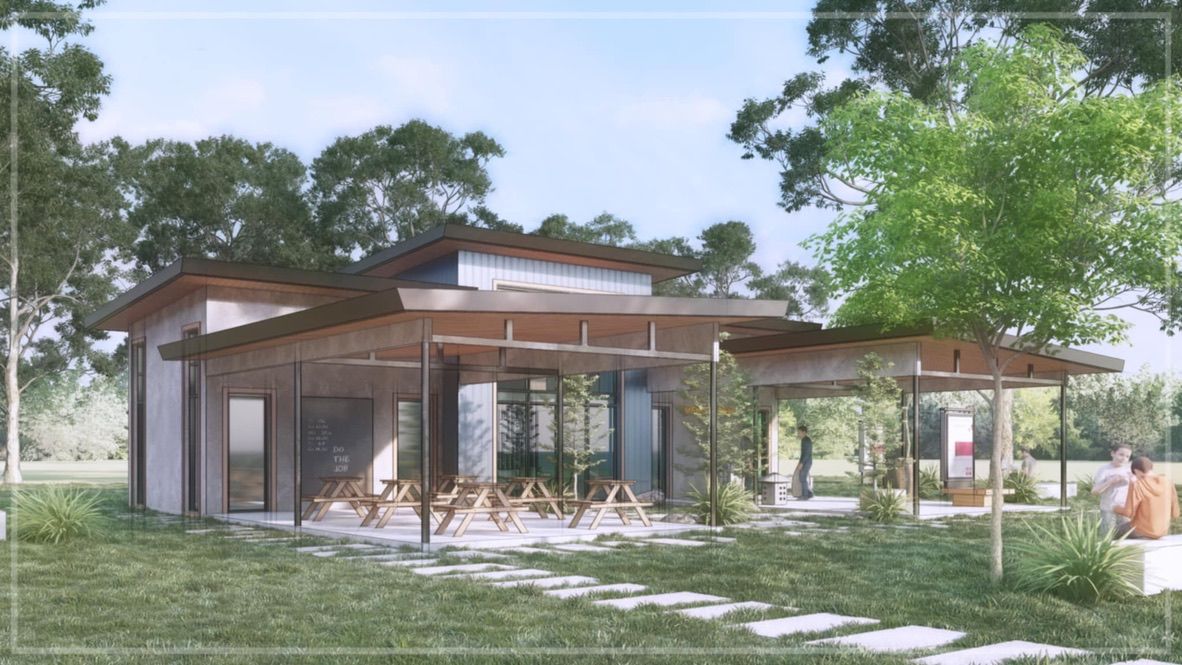
Setting up a public library and museum in my hometown of Padada, Davao del Sur, is my ultimate dream. Currently, there are no public museums in Padada. The only libraries belong to the town’s two private schools. Because of this, finding someone who reads for fun is rare. Smartphones offer instant gratification, easily winning out over books. Without other local recreation options, people often default to idle chatter or drinking to pass the time. Why Padada Needs a Public Library and Museum Small-town libraries and heritage museums exist in other countries, but they are incredibly rare in the Philippines. We see great initiatives like free pop-up libraries in Metro Manila, but you rarely see these projects reach the provinces. For someone living in a rural

read more   →

Jackstone: How to Play the Filipino Game of Ten Stones

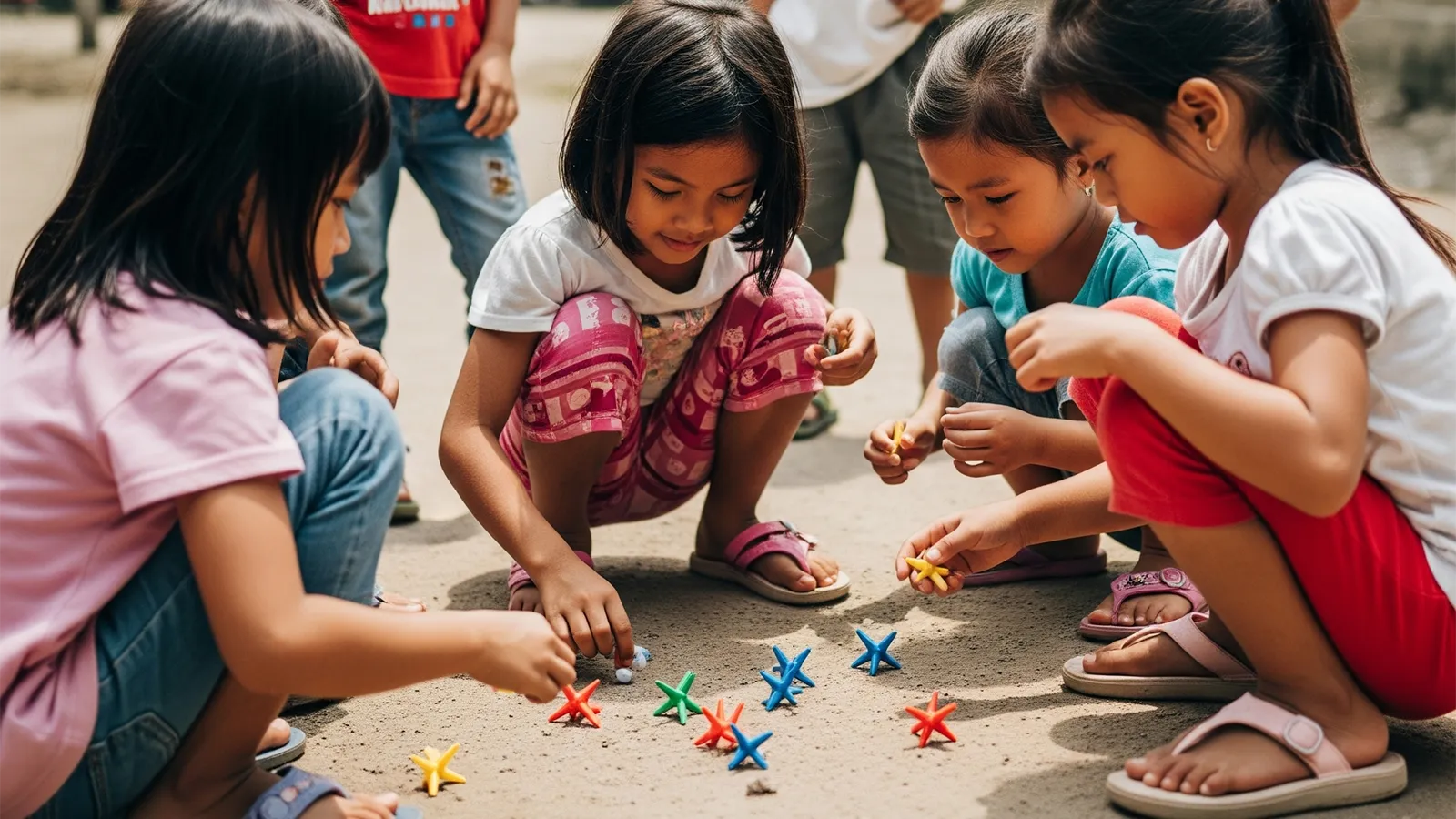
Series: Game of Titos and Titas – Part 5 Key Takeaways Jackstone is played with ten six-pointed metal stones and one small bouncing ball Ten numbered rounds — picking up one stone, then two, then three, and upward — are only the qualifier The real game is the exhibition round, where the leader sets a trick move and everyone else must copy it exactly Into the Cave, or kweba, is the hardest of the ones we played: you arch one hand on the floor and sweep the stones underneath it Nine named exhibitions are set down here — three from my own memory, six reported by players elsewhere You don’t win by being flawless. You win by imagining something nobody else can do.   All

read more   →
A boy crouching with the long stick in a game of syatong, the short stick airborne above him as other children watch

Syatong: How to Play the Filipino Stick Game

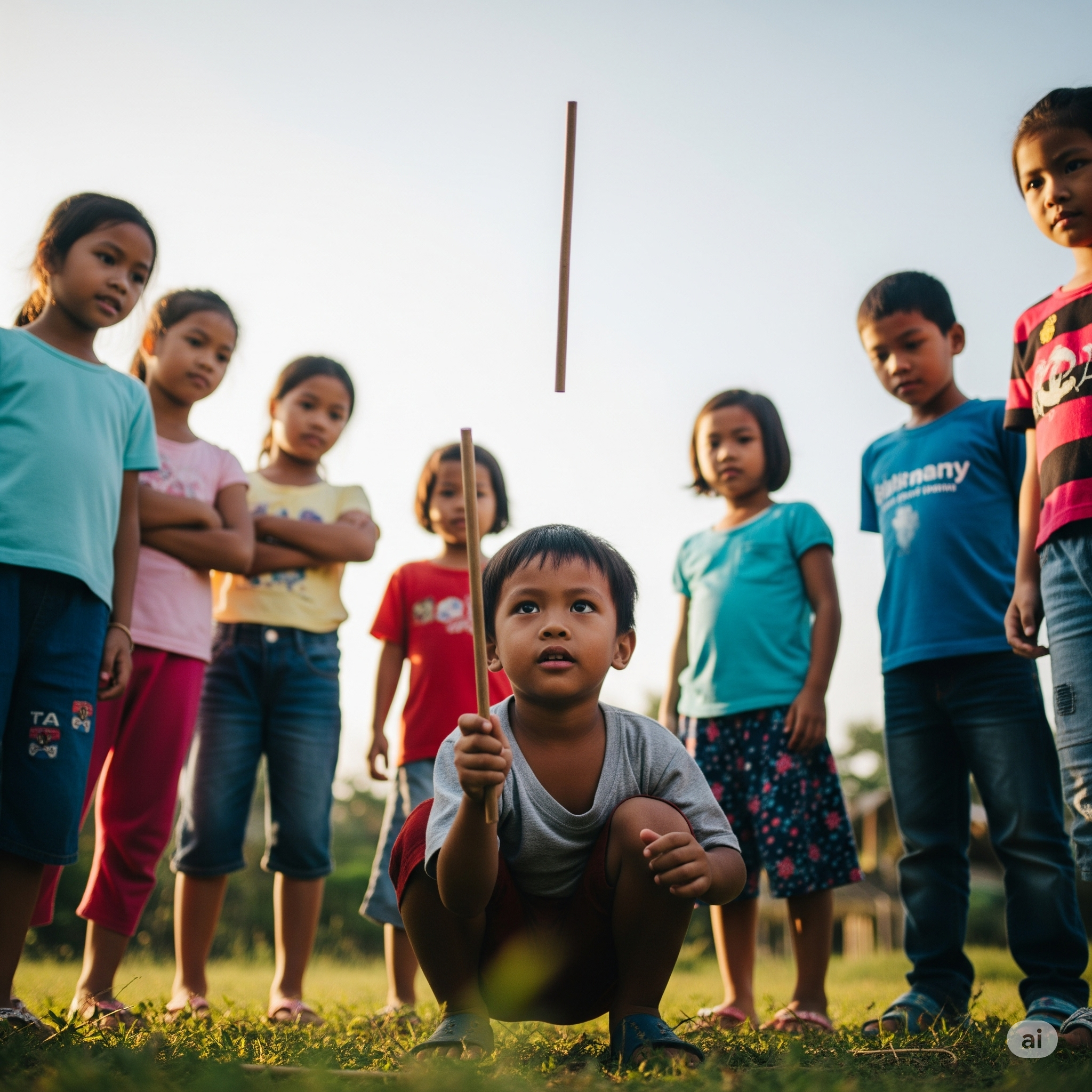
Series: Game of Titos and Titas – Part 4 Key Takeaways Syatong is played with two sticks and a shallow ditch — and it produced more bruised hands than any other game we played Three phases, and you must survive all of them before a single point is counted Two scoring systems were in use — shrink the ruler, or apply a multiplier — and which one applied had to be agreed before play The short stick — the one that gets struck — is the whole game The losing team must run the field shouting “syatong” in a single breath, restarting wherever it gives out   Every summer, back when video games and computers were still a rarity, you would see children and teenagers

read more   →
Boys crouched in a ring on a narrow street playing holen, glass marbles scattered on the ground between them

Holen: How to Play the Filipino Marble Game and Pamato

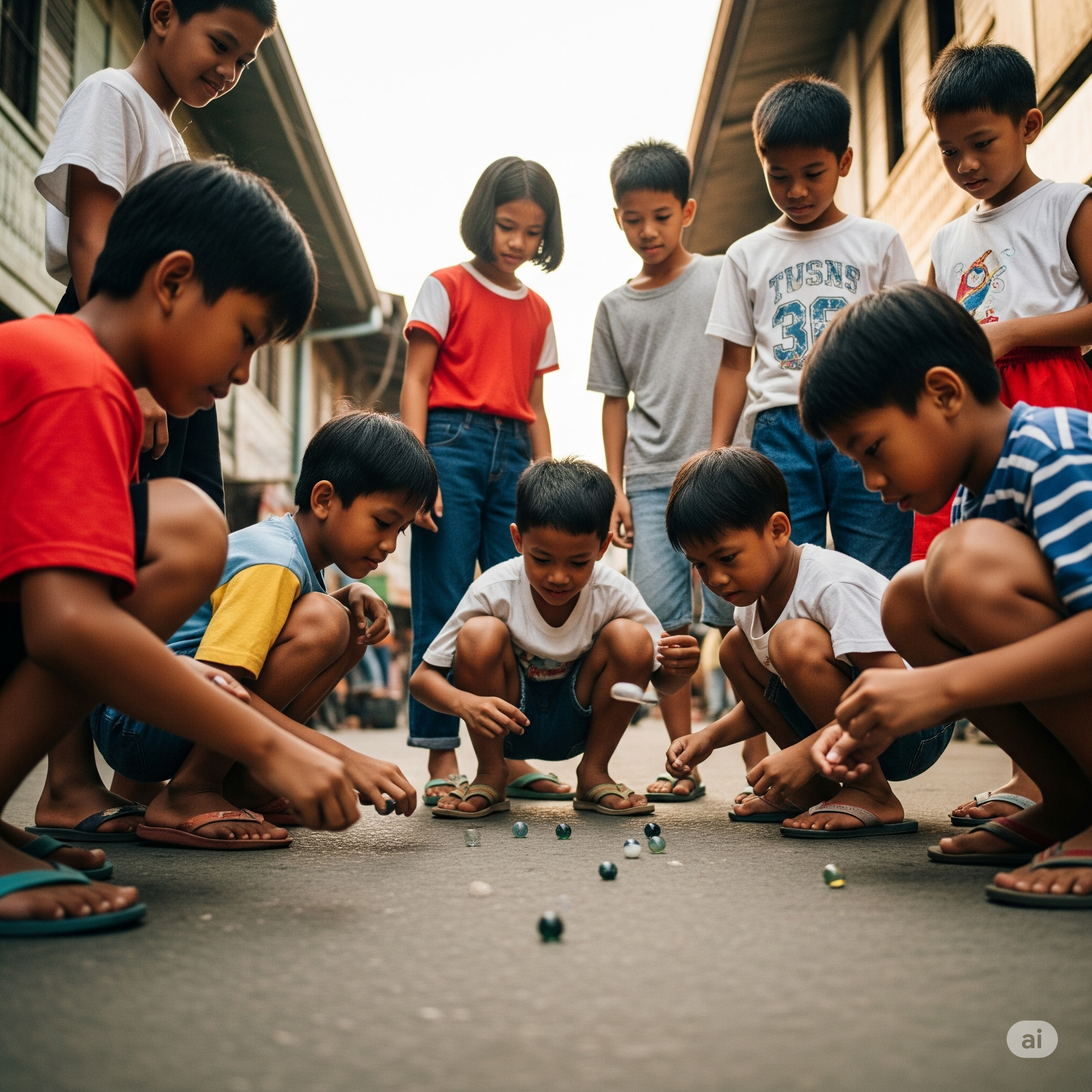
Series: Game of Titos and Titas – Part 3 Key Takeaways Holen is the Bisaya word for glass marbles — jolen in Tagalog-speaking areas Your pamato is your shooter: the lucky marble, never traded at any price Two ways to play: the ring, won by accumulation, and the duel, fought straight at your opponent until bankruptcy or surrender The winner takes his opponent’s marbles, which is why nobody could ever stop at one round   Holen was the boys’ game. Holen is the vernacular for marbles — and mind you, not the marble used to make floors and countertops. A holen is a small glass sphere with a design suspended inside it. The most common carries a ribbon-like twist of colour at its centre. Some

read more   →
A moonlit provincial neighbourhood at night where children play birus, a Filipino team game of hide and seek

Birus: The Filipino Hide-and-Seek Played by Moonlight

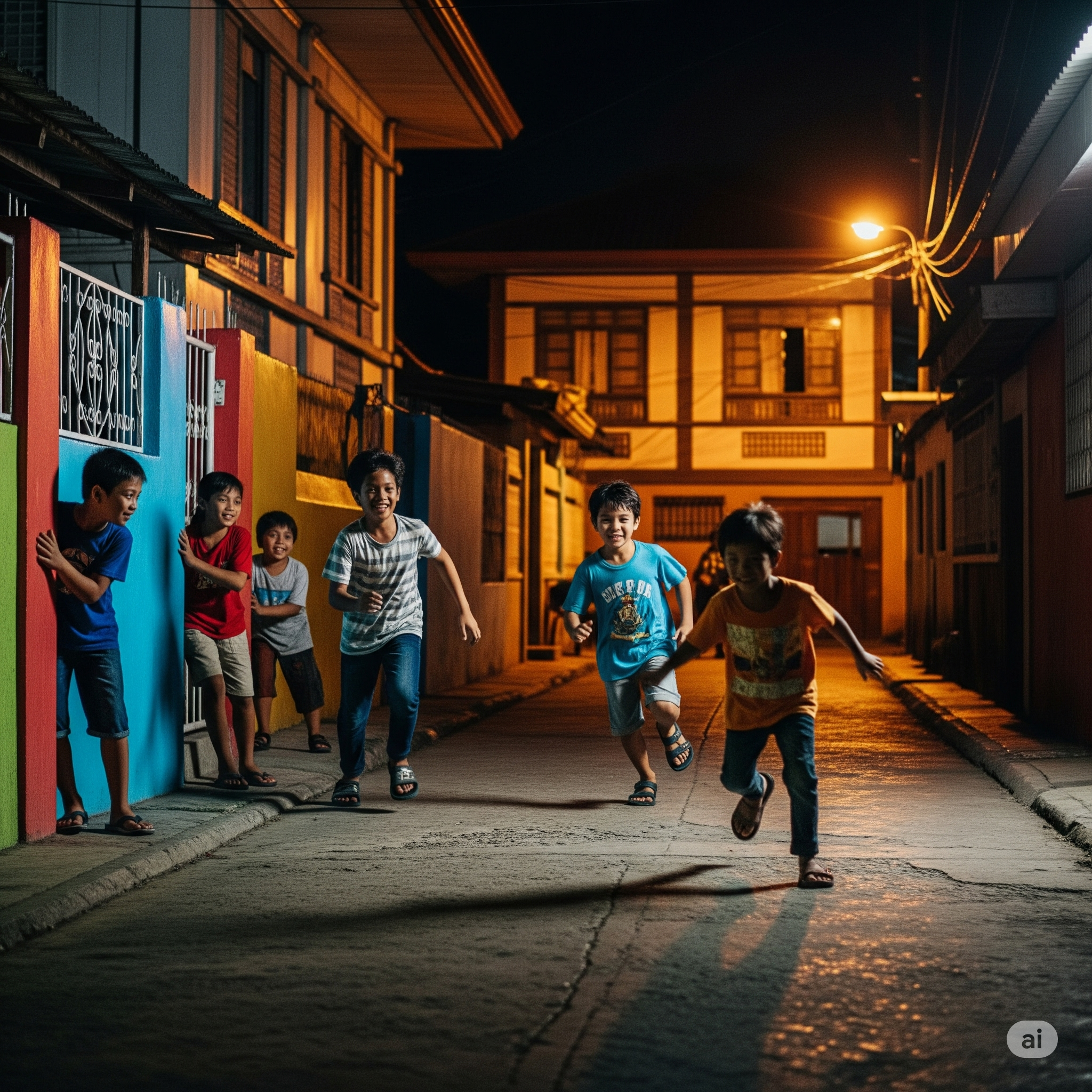
Series: Game of Titos and Titas – Part 2 Key Takeaways Birus is hide-and-seek escalated — played in teams, and finding someone isn’t enough You have to chase them, tag them, then sprint back to base and call it out before the catch counts It was a full-moon game, and the reason is more practical than mystical It has largely died out because it needs three things that are now hard to assemble: open space, a crowd of children, and an entire free evening   Everyone has played hide and seek. Very few can say they’ve played birus. Birus takes the ordinary childhood game and adds teams, tagging, a sprint back to base, and a running time measured in hours rather than minutes. Winning takes

read more   →
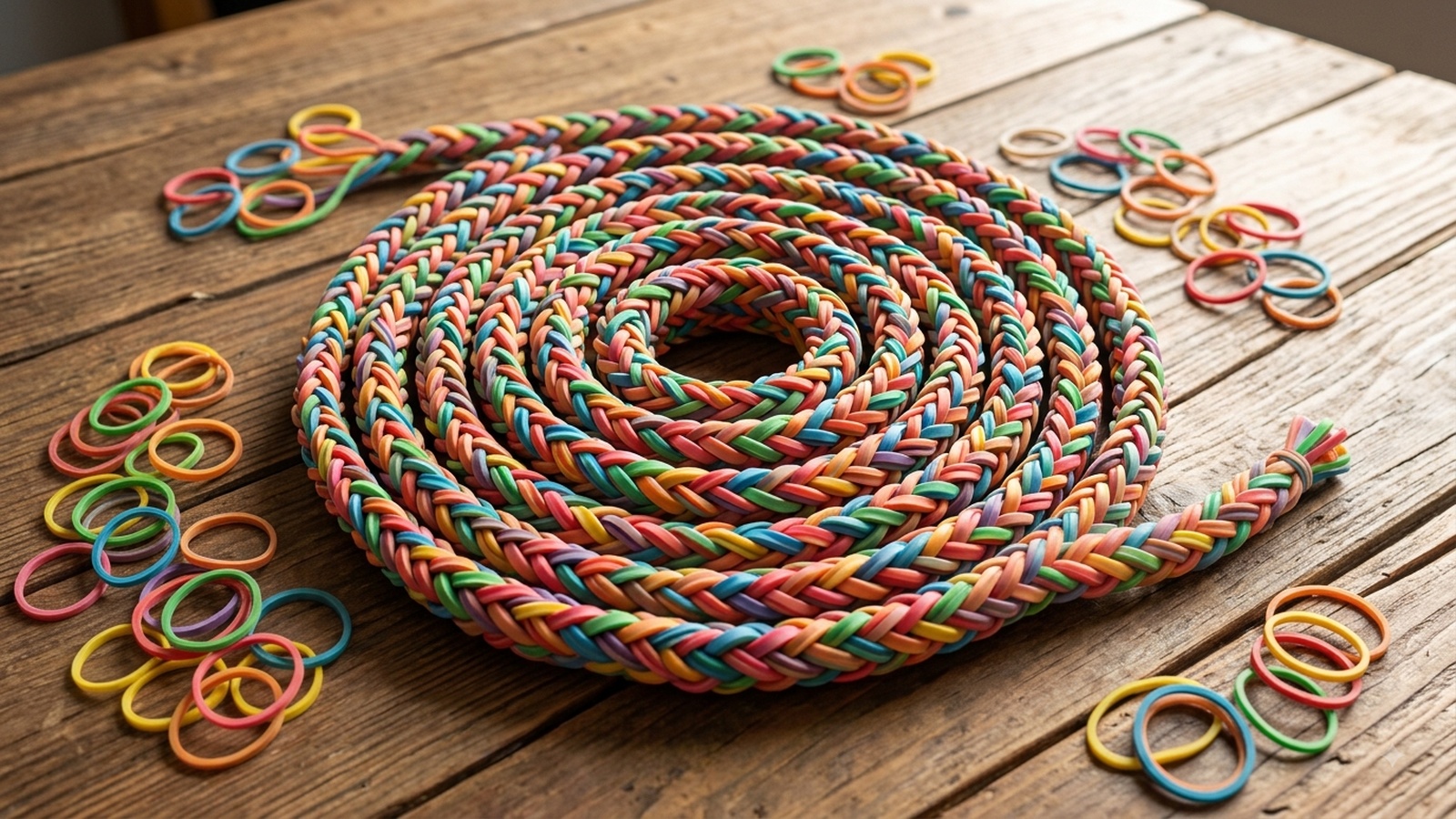
A long rope of braided rubber bands coiled on a wooden table, with loose coloured lastiko scattered around it

Lastiko: The Filipino Rubber Band Games We Played as Kids

Series: Game of Titos and Titas – Part 1 Key Takeaways Rubber bands — lastiko — were currency, trophy, and equipment all at once, and a long braided stash was a visible record of every game you’d won Three games ran the season: dampa, pitik, and card games with rubber bands as bets Mothers fought back with two weapons: the threat of rubber band soup, and vivid folklore about amputated hands Having no money to buy rubber bands is precisely why I had to get good at winning them   Kids today rarely play outside. Most of the time their noses are pressed to a screen — tablet, smartphone, console. They rarely see the sun or shed a drop of sweat. Looking at the children

read more   →

The Art of Shining Shoes

Limpya Bota is a lost art. It was once a ubiquitous part of life, before the advent of those do-it-yourself liquid shoe polish that you buy at the grocery store. You shake it, press it directly on the shoe, slather it all over the surface and you are done. Convenient, yes, but soulless.  In Cebuano, Limpya means to clean up, and Bota means boots. It’s exactly the same in Spanish, although with a slightly different spelling. Shoe shiners are called limpiabotas both in Madrid and in Padada. At one point in my past, I was proud to be one of them.  You see, it was the 70s. Money was tight, and Papang was still recovering from his accident. We had to pull our weight so

read more   →

The Most Difficult Times of Our Lives

Sometimes, life just gives you one challenge after another – and it’s up to you to see how you can rise to it.   Just after my graduation from elementary school, Papang got into an accident. The vehicle he was driving was rammed by a passenger bus. He survived – but he sustained serious injuries.  We didn’t have any money, and Papang’s release from the hospital was delayed because we couldn’t pay his medical bill. It was only after he and Mama signed a promissory note that he was able to leave the hospital. Life was tough before, but this accident made it even worse. Papang was bedridden for more than six months. We could not afford a wheelchair, so he was on crutches for more

read more   →

A Lesson in Perseverance: A Father’s Incentive of Delayed Gratification

The Drive to Excel: Scholarship and Perseverance Penury spurred me and my siblings to excel and persevere in our studies. For me, academic excellence was crucial for survival.  “Apart from my desire to always excel in academics, it was imperative of me to maintain my scholarship. Otherwise, I would not be able to continue my schooling if we were to pay my tuition and other fees”. Papang’s Bicycle Incentive at Padada Central Elementary School Papang motivated his children with a thoughtful incentive, promising a bike to any child who topped their class at Padada Central Elementary School. For me,  the bicycle represented tenacity, convenience, and the primary means of affordable mobility around Padada, which Papang and many others used daily for work. A Symbolic Reward:

read more   →