Series: Game of Titos and Titas - Part 1
Key Takeaways
- Rubber bands — lastiko — were currency, trophy, and equipment all at once, and a long braided stash was a visible record of every game you’d won
- Three games ran the season: dampa, pitik, and card games with rubber bands as bets
- Mothers fought back with two weapons: the threat of rubber band soup, and vivid folklore about amputated hands
- Having no money to buy rubber bands is precisely why I had to get good at winning them
Kids today rarely play outside.
Most of the time their noses are pressed to a screen — tablet, smartphone, console. They rarely see the sun or shed a drop of sweat.
Looking at the children now and the games they play, my own childhood seems radically different. A bygone era, indeed.
Growing up, my parents could hardly keep me inside the house. There were no video games then, and even if there had been, I knew my parents could not have afforded one.
So I played outside. I needed no equipment beyond my closest friends, a free afternoon, and a fistful of rubber bands. I went home sweaty and happy.
A game of skill, hated by mothers
My friends and I played with rubber bands — lastiko, as we called them in our place.
I was proud of my collection. I spent hours challenging my friends and refining my technique, and I could tell you the state of my stash on any given afternoon the way an adult knows his bank balance.
There were three games that mattered.
Dampa
Pile some rubber bands on the ground — smooth concrete is best. Agree on a finish line.
Then cup your hand and strike the ground beside the pile. Get it right and the compressed air under your palm flings the rubber bands forward. Every band that crosses the finish line is yours.
The whole game lives in the shape of your hand. Too flat and nothing moves. Too steep and you hurt yourself for nothing.
Pitik
Roll the rubber bands into a bundle. Players take turns flicking at the roll with a finger.
Whoever manages to separate a single band from the roll wins every band in it.
Rubber bands as bets
We also played cards and staked rubber bands on the outcome. The popular games in my time were pares-pares, pusoy, and a straightforward one we called pataasan — draw from the pile, highest card wins.
The braid was the scoreboard
Having a lot of rubber bands was a badge of honor. It was documentary proof that you had won a great many contests.
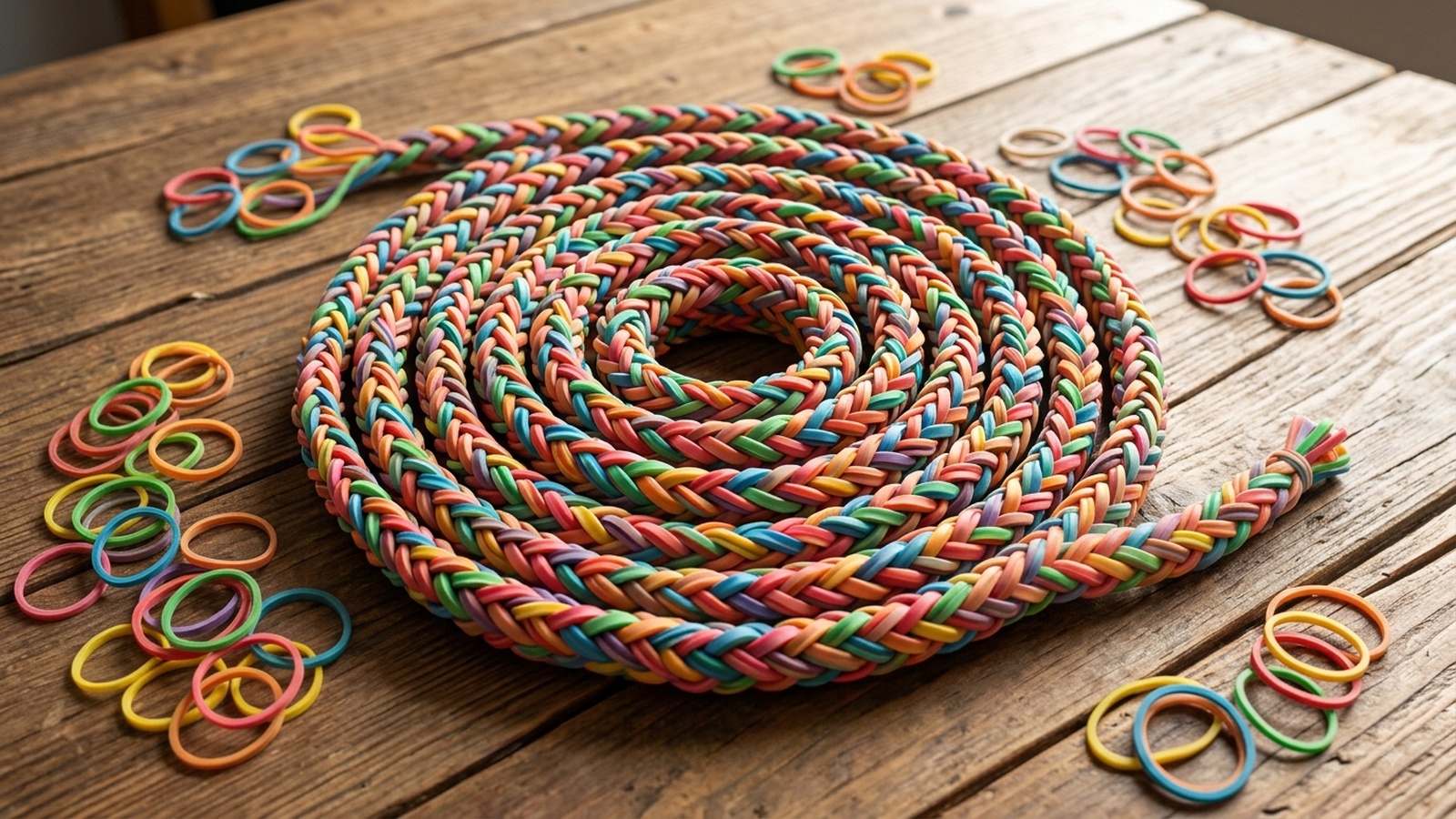
I braided my winnings into a long rope and took enormous pride in its length. We measured them against each other, and a friend with a longer braid was an invitation to play again immediately so I could shorten it.
That braid was the closest thing we had to a public record. You could not bluff about how good you were, because everyone could see the length of what you’d won.
Rubber band soup and threats of amputation
Children in my hometown loved lastiko. Mothers hated it.
They would threaten to confiscate our rubber bands, boil them, and make us drink the soup.
My mother used that warning on me one particular afternoon when I failed to come home at the time I’d promised. I made sure to come home on time after that — and I also learned to hide my braided stash extremely well, just in case.
When boiling threats stopped working, mothers escalated to folklore.
There was the boy whose hand had to be amputated because a vein burst from pounding the concrete at dampa. There was the boy who lost a fingernail striking the ground at pitik. My friends and I traded these stories among ourselves, comparing versions, and they frightened us for a little while.
The effect was that we got careful. We made sure our technique was correct and that we weren’t slamming our hands into the concrete harder than the game required.
Then we forgot about it and played on until the season ended.
And yes — we treated lastiko like a professional sport, with a season. Nobody’s hand was amputated. Nobody lost a fingernail. Maybe we were simply better than the boys in our mothers’ stories.
You had to get good to be the best
If you had a lot of rubber bands, you were one of the popular kids. There were other games you could join, other bets you could cover.
Playing dampa was how you got more of them when you had no money to buy any. That was my situation exactly, and it is the entire reason I had to get good.
Rubber bands had other uses, too. The girls braided them into long ropes for Chinese garter. Some of us boys made slingshots and chased each other around firing folded paper. And if we pooled enough of them, we wound them into a ball and threw it about — with the rule that anyone who unwound an odd number of bands got to keep them.
Some valuable lessons from the simplest of joys
We needed no expensive or flashy toys. With nothing but rubber bands, my friends and I had the time of our lives.
Those games taught me things I still live by.
I learned to play fair and get along with people. I learned to appreciate the little I had and make the most of it. I learned that you win some and lose some, and that you owe your opponent his due when he has beaten you fair and square. I learned that sometimes you go with the flow and enjoy the game while it lasts.
And I learned that when you have no money, the only way to get what you want is to get good at it. That lesson has held up better than almost anything I was taught in a classroom.
Most importantly: listen to your mother. Go home when you say you’ll go home — or lose your hard-earned stash and drink the soup.
And don’t hit the ground too hard. Or so I was told.
Frequently asked questions
What is lastiko? Lastiko is the Filipino word for rubber band. It also refers collectively to the games children played with them — chiefly dampa and pitik.
How do you play dampa? Pile rubber bands on smooth concrete and set a finish line. Players cup a hand and strike the ground beside the pile; the rush of air flings bands forward. Any band that passes the finish line is won.
What is pitik? Rubber bands are rolled into a bundle and players take turns flicking it with a finger. Anyone who separates a single band from the roll wins the whole bundle.
Are these games still played in the Philippines? Rarely, and much less than a generation ago. They survive mostly in school heritage-games programmes and Buwan ng Wika activities rather than in everyday play.
Game of Titos and Titas — the full series
- Lastiko: The Filipino Rubber Band Games We Played as Kids (you are here)
- Birus: The Filipino Hide-and-Seek Played by Moonlight
- Holen: How to Play the Filipino Marble Game
- Syatong: How to Play the Filipino Stick Game
- Jackstone: The Game of Skill and Flair