
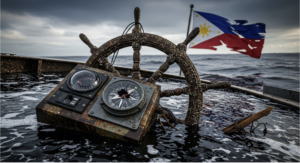
The Philippines is reacting to the global oil shortage, not managing it. The crisis, triggered by the war in the Middle East, exposes how dangerously unprepared the country is.
As former Finance Secretary Carlos Dominguez bluntly stated, solving an oil crisis is harder than fighting COVID-19. His quote sums up the difficulty: “you can quarantine a virus, but you cannot quarantine the global oil market.”
The government’s current response suggests this is being treated as a temporary disruption, not a structural crisis.
Unprepared and Knee-Deep: The Reactive Response
The country was caught completely off-guard. Reports show that the Philippines has only about 45 days of fuel reserves. Given that we import nearly all of our oil, mostly from the Middle East, this limited reserve is not just risky—it is borderline negligent.
After decades of oil price shocks and a volatile situation in the Middle East, strategic reserves should have been a priority for energy officials. Instead, we are scrambling to secure supply while already entrenched in the crisis.
The government’s primary action—declaring a national energy emergency—sounds decisive on paper but feels reactive in practice. Lawmakers have already highlighted a concerning lack of a “unified and coordinated response”.
Inadequate Measures vs. Global Conservation Strategies
What makes this response frustrating is that other countries are actively managing demand and supply, not just reacting. Governments globally are pushing aggressive conservation strategies such as mandatory remote work, reduced travel, fuel rationing, and targeted subsidies.
In contrast, Philippine measures—like a four-day workweek for government offices or minor energy-saving guidelines—feel inconsequential.
The inconsistent messaging further complicates the issue. Officials first downplayed the situation as merely a “price disruption”, only to declare a full-blown national energy emergency the day after. This sudden reversal suggests a profound lack of communication and coordination.
While some mitigation efforts are being rolled out, such as activating a ₱20 billion fuel security fund and providing subsidies and free transportation to ease the burden on commuters, these only deal with symptoms, not the root cause.
The Core Issue: Absence of a Long-term Energy Strategy
The core issue remains the Philippines’ lack of a long-term energy strategy commensurate with its vulnerability. The country imports nearly everything, maintains limited reserves, and lacks aggressive investment in alternatives. When a global disruption occurs, the result is the current scenario: scrambling, negotiating, and hoping the crisis stabilizes before fuel reserves are depleted.
The current response is inadequate. It is not that nothing is being done, but that every effort feels late, fragmented, and reactive. This oil crisis does more than test the energy sector; it exposes deeper issues in governance, planning, and strategic foresight.
The only potential silver lining is that this crisis serves as a necessary wake-up call. The fundamental question, however, remains: will the country finally wake up and act strategically, or simply hit the snooze button again?
EMAIL: nicgabjr@gmail.com X:@nicgabunada