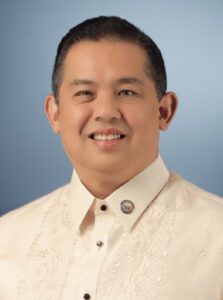
When former House Speaker Ferdinand Martin Romualdez declared that he would “not allow myself to be turned into the scapegoat”, it wasn’t just a denial – it was a signal.
“I will not go quietly, and I will not go alone. I will not be the fall guy for other people’s corruption.”
This statement signals that this is no longer the quiet investigation into anomalous infrastructure projects.
Philippine political scandals tend to follow a pattern: first, the revelations, and then the investigations. Next come the denials, and finally, the narrowing of responsibility to a handful of individuals. Some take the blame, maybe get some time in prison, all’s well that ends well.
But what we are seeing now disrupts that pattern.
Escalating Blame Game: Romualdez, Ombudsman, and the Senate Probe
The refusal to play along – to accept the role of the “fall guy” – introduces instability into a system that depends on quiet settlements. This ongoing blame game continues to escalate into a broader political rupture, implicating higher and higher levels in the government as the narrative continues to expand.
The scandal is moving fast and involving powerful institutions:
- Ombudsman Boying Remulla confirmed a freeze order was secured by the AMLC against Romualdez over the flood control probe.
- Senator Rodante Marcoleta is demanding that Romualdez face a senate probe.
The hounds have the scent – and as Romualdez challenges the Ombudsman, “if your office truly believes in justice, then follow the sworn statements, follow the records, and follow the evidence all the way.”
His refusal to “go quietly” suggests that accountability, if it comes, will not be contained. Damay damay lang; if one falls, everyone falls.
Malacañang’s response has been just as revealing. The Palace was quick to clarify that PBBM did not feel alluded to in Romualdez’s remarks. A simple denial maybe, but the subtext is unavoidable: if someone is refusing to be the scapegoat, then who is the one being protected?
It’s no longer a question of “who took what”, but a question of “who will be made to answer for it?”
The Real Cost of Corruption: Filipinos Face Unfinished Flood Control Projects
It’s easy to get lost in the personalities – who said what, who is allied with whom, who is turning on whom. But that risks missing the real issue.
Flood control is not a “symbolic” policy area, but a matter of survival. The consequences are not theoretical.
It’s not as if the missing flood control structures are already being built. While our duly elected officials are busy pointing fingers, shifting blame, and washing their hands, Filipinos continue to be exposed to the threat of flooding.
We continue to be at the mercy of the elements, and it feels that justice couldn’t come sooner. This is what makes this political theater so difficult to accept – while officials argue who will be blamed, the public continues to bear the cost.
Don’t Be Lost in all the Noise
So what should we take away from all of these?
It’s not just that corruption exists, or that powerful figures are implicated—that is old news. What is different about the flood control scandal is that:
- The political script is being disrupted.
- The cracks are showing in the system.
- The house of cards is about to be blown away.
It’s exhausting, and tempting to just be lost in all the noise and not pay attention. But that exact response is what allows this pattern of corruption to continue.
If there is any value to what is happening right now, it’s that everything is starting to be visible. The cracks are widening, and the script is being disrupted. The question is whether we will look closely enough to understand what is actually being revealed.
Accountability does not happen because it is promised; it happens because it is demanded.
So let’s all pay attention. Let’s see where the trail leads. Let’s see if the Ombudsman really takes the challenge of Romualdez at heart, to “follow the evidence all the way”.
The floodgates are open, and the rains are coming. I say let them point their fingers.