Disclaimer: this article is lifted from a talk I gave 10 years ago. Entitled “Radio: Living and Breathing in the New Digital World”, it was a reflection on the state of Radio at a time when the internet and social media was already becoming the norm.
Some statements and ideas here may no longer be applicable now, as internet connectivity continues to challenge Radio as a medium. Nonetheless, I hope this provides an insight into a time when trends were shifting, and Radio was trying to maintain its relevance in an ever-shifting world.
***
In this day and age of social media and streaming services, we may think radio is dead. Why would the airwaves still matter when almost everyone has 5G on their phones?
The radio seems obsolete – but, when you really think about it and consider how radio is used in the smartphone age, you would be greatly mistaken.
Radio, now, is pretty much still a living and breathing medium. The digital world presents radio with new business opportunities – you would be remiss not to seize and capitalize on them.
If you look at the industry closely today, people are still listening to the radio. For some, listening to their transistor radios is still a necessity, as it’s their only source of news and entertainment. The developments in communication technology have not eroded the charm of tuning into the medium; in fact, some people tune into the radio not necessarily via the airwaves and the standard radio sets, but via other means and devices.
Radio continues to offer two things that no other gadget can give: human connection and practicality.
In this piece are a few of my musings on radio, what the industry is like in the Philippines, and what I think we could do to leverage its advantages and strengths.
These thoughts were inspired by a talk I gave more than a decade ago to advertising colleagues and media owners – I think that these points and recommendations still hold up even today.
Radio Serves a Specific Need
Consider this: why is it that whenever we hear our songs being played on air, they sound a thousand times better? It’s because the mystery and randomness of radio still excite us every time.
Why is it that when DJs read our thoughts aloud, we feel a certain rush? Because it is always a warm feeling to know we belong; we are recognized, we are part of something, and we are heard.
Radio will never die, for it will continue to serve specific needs.
Tablets and smartphones can be a good source of news and information. But unless you have a driver, you can’t browse websites while clutching the steering wheel in traffic. With a car radio, you just turn it on and you’ll hear the latest news from broadcasters while you’re traveling from point to point.
In times of calamities, when nothing is left but a lighted candle and your transistor radio, essential news and announcements can still come to you.
These are simple circumstances – but these are enough to show that radio will stay relevant and needed for a long, long time.
Radio Should Follow their Audiences
My second point is this – for radio to continue to be a living, breathing medium, it has to follow its audience wherever they may be.
Radio audiences have started to live a double life: offline and online. Unlike the olden days, people now have the devices to do so. A smartphone is as ubiquitous as the transistor radio; perhaps even more so.
Audiences also have better ways to connect, unlike before where it’s just the airwaves. Wi-Fi connection is widely accessible, and it seems like every year, telcos are revamping their networks to provide more powerful data options.
Gone are the days when the radio station’s coverage was determined by the power of its transmitter and antenna systems. Today’s technology makes it possible for radio programs to be heard beyond the borders defined by National Telecommunications Commission (NTC). In fact, radio can now be heard even beyond the country’s borders.
Today, it has become possible for radio stations to follow target audiences wherever they may be, anywhere in the world.
A New Way of Engaging Beyond the Airwaves
Therefore, for radio to continue to be a living and breathing medium, it has to be accessible via this generation’s devices: Mobile phones, tablets, and personal computers, on top of the traditional radio sets. Moreover, radio programs must not only be made available in real-time via live streaming but also for later listening via podcasts.
To be sure, quite a number of Philippine radio stations are now present on the internet. Digital appendages of radio stations have already broken down geographical barriers and time zones, tapping a new market that could have never been realized in years past.
For example, via an iPhone app called Radio Philippines, I can listen to a Philippine station for my daily dose of news or socio-political chismis even if I am abroad.
In Metro Manila, I can still listen to a provincial radio station to keep track of developments in my hometown. Also, podcasts provide me the convenience of listening to favorite radio shows at my most convenient time.
For Radio, Content and Engagement is Still King
My third point is this – content has to adjust for radio to continue to be relevant.
Several years ago, unilateral was the best way to describe the interaction radio talents have with their listeners. This one-way street grounded the basic format of any radio show. Play music, raise a single topic to engage the audience, deliver the news, and air something in commercial spots.
This format has triumphantly endured the early surges of technological inventions, with listeners way back when calling in (or, for those really old radio listeners, paging in) their responses or song requests.
There also came the early days of mobile phones where radio stations entertained text entries. But the cost attached to it became a limitation in itself.
These one-sided formats are now becoming less and less attractive. With the rise of the internet, the idea of online communities sprang forth as interaction-based sites prospered across the web, and people got addicted to it.
Keeping Up With the Times
Radio just had to keep up. And it did so impressively well in some cases, finding out that their audiences now value closer interaction and the feeling of belongingness. Local broadcasters knew they had to tweak the format, utilize not only their station websites but more importantly, leverage the influence of social networking sites.
The mechanics of doing radio shows now includes the reactions and thoughts of listeners who tweet and post relentlessly without censorship and free of charge. It’s as if two shows are happening simultaneously – the actual show on the airwaves and the other one on Twitter (now X) and Facebook.
Digital not only widens the market; it also enhances the whole radio experience. It gives a new dynamic and life to it. The on-air discussion of listeners’ texts, tweets, and Facebook comments has become as essential as playing requested songs. Notably, half of X’s trending topics in the morning are topics from radio shows airing on different frequencies.
An Evolving Field of Advertising for Radio
My fourth and final point is this – in order to survive financially, radio must continue to provide advertisers with the required number and quality of audiences desired by brands.
We all know this is easier said than done. The secret is to keep your ear to the ground and never lose sight of your audience, and both advertisers and broadcasters have to respond quickly upon the discovery of that opportunity.
Moreover, what works for the advertiser now may no longer be what they want to have tomorrow. We all remember how this evolved. Advertisers used to just be satisfied with the 30-second radio commercial. Then they started discovering other ways of marketing their brands via radio. There were tactics like AOBs (Announcer on Board), “brought to you by”s, announcer and radio DJ discussions, and events to accompany radio spots.
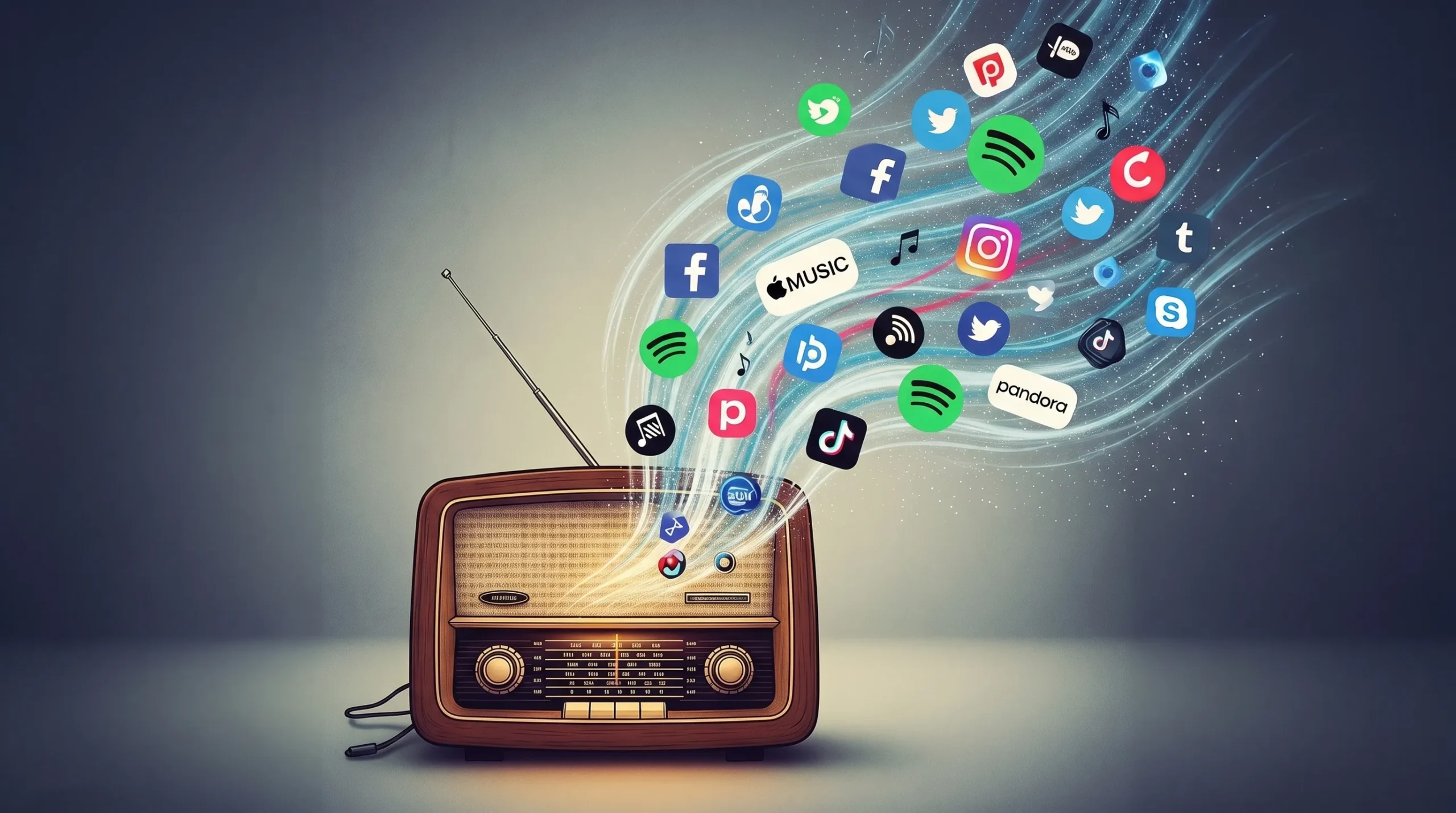
Now, Facebook, X, TikTok, and other social networking sites have evolved into some form of a digital arm of any radio station. On-air promos and ads would always have a follow or like element to them, encouraging listeners to visit and join the online communities of their brands. The use of hashtags has been a common way for listeners to be heard and recognized by radio shows.
For broadcasters, X’s trending list has become the gauge of popularity. And moreover, digital-savvy advertisers do not only settle for the usual on-air exposure. They now clamor to get digital exposure as well. Stations with their own websites can take advantage of this reality since they can now offer additional value through their official websites and social media pages.
Radio is Alive and Kicking
To recap, radio is not dead, and provided companies and radio stations make adjustments given the current improvements in technology, it will continue to attract the next generation of listeners and advertisers.
How can radio owners ensure this happens? Three action points:
- Be where your listeners are, whether offline or online,
- Adjust your content, taking into consideration social media interaction and other brand engagement ways of doing it
- Show advertisers that you have audiences, and that these audiences engage in conversations relevant to the equities that the brands associate themselves with.
These are just a few of my thoughts on the state of radio in this day and age. You can see that a lot of companies adopt these strategies – those that don’t run the risk of fading into obscurity (if they haven’t already).