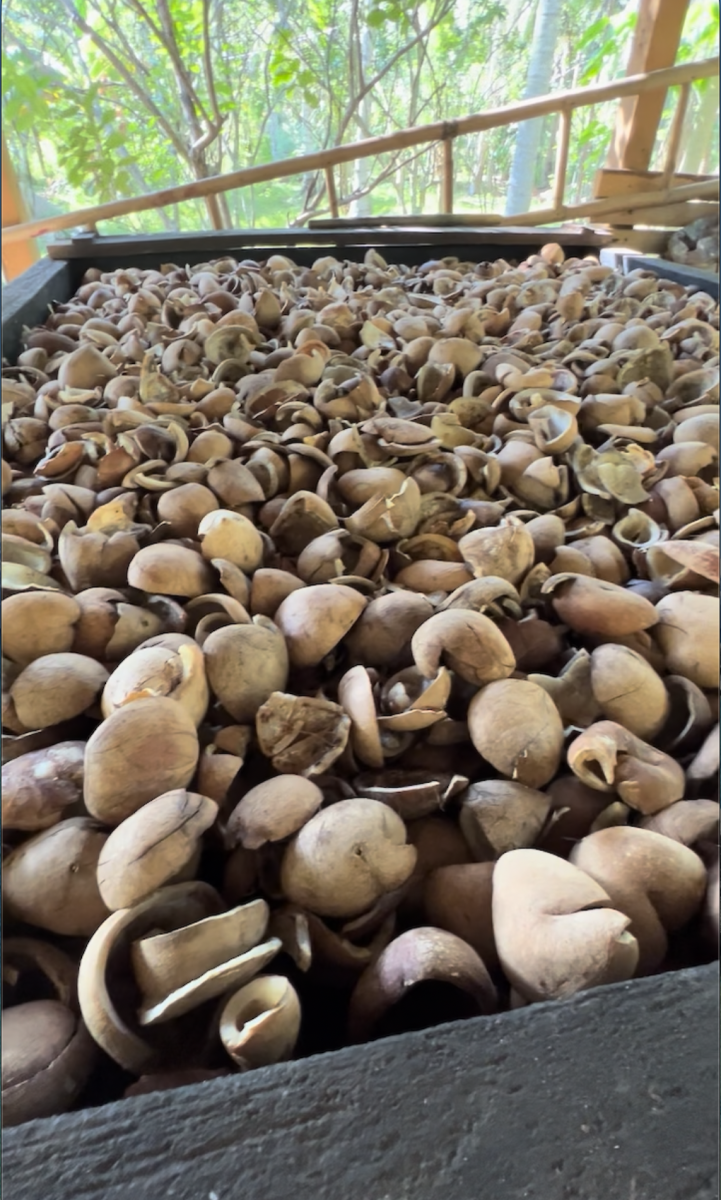
The process of turning the coconut fruit—which is technically a drupe, not a nut—into a sellable product is what we call mangopras. This term mangopras encompasses all the steps involved.
The Seven Steps of Copra Production
The complete process of turning a coconut into copra involves seven or eight primary, sequential steps:
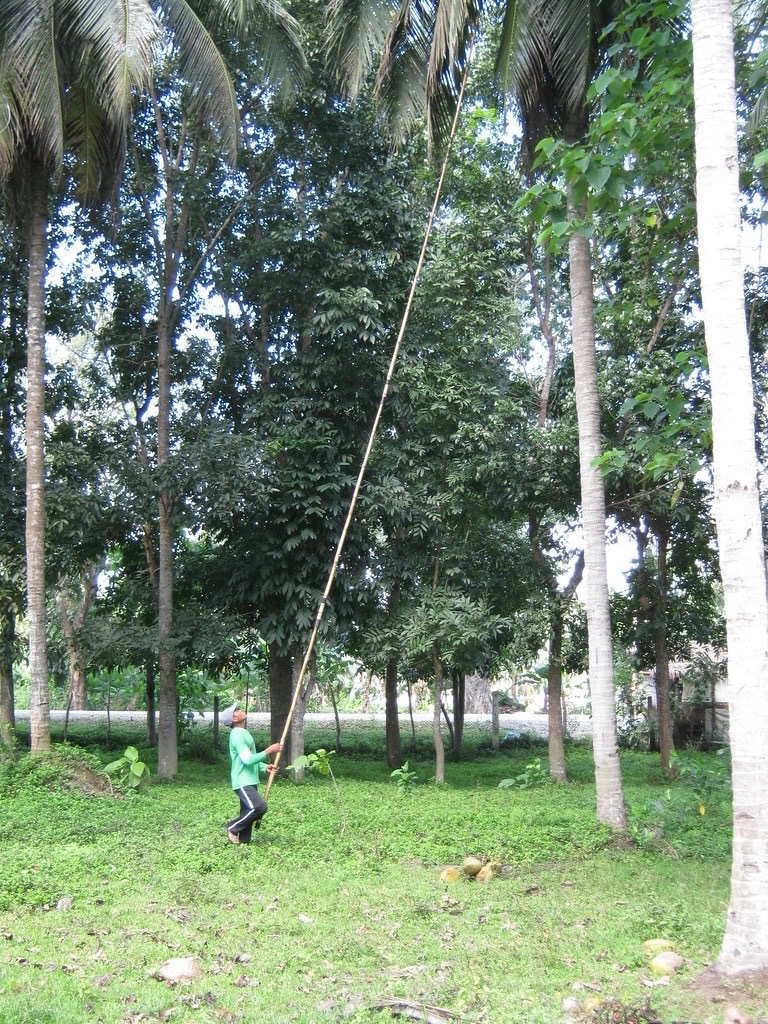
- Sungkit (Harvesting): Hooking the coconut from the tree using a panungkit (a long, sectional bamboo pole).
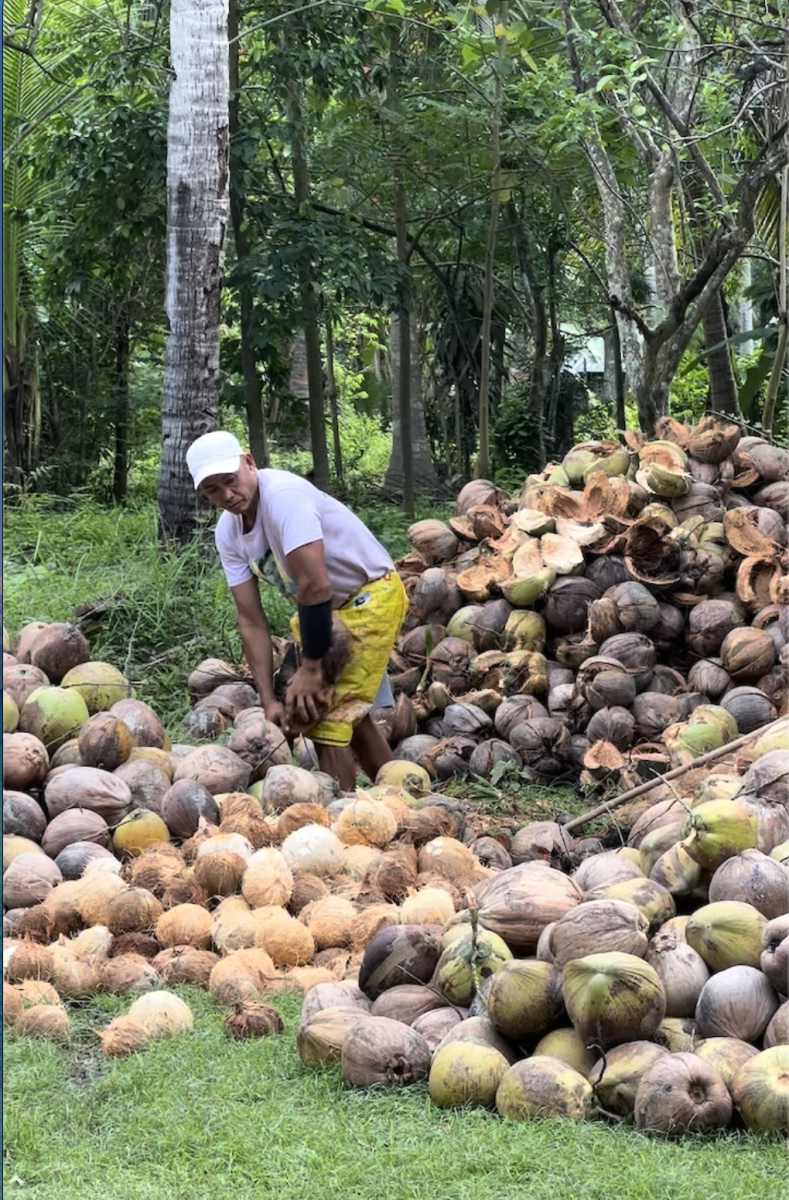
- Tapok (Gathering): Collecting the fallen coconuts into a heap.
- Hakot (Transporting): Bringing the gathered coconuts to the processing area, known as the koprasan.
- Preparasyon (Preparation): This involves either Bunot (husking the nut) or directly preparing the nut for cracking.
- Buak (Cracking): Breaking the prepared nuts in half.
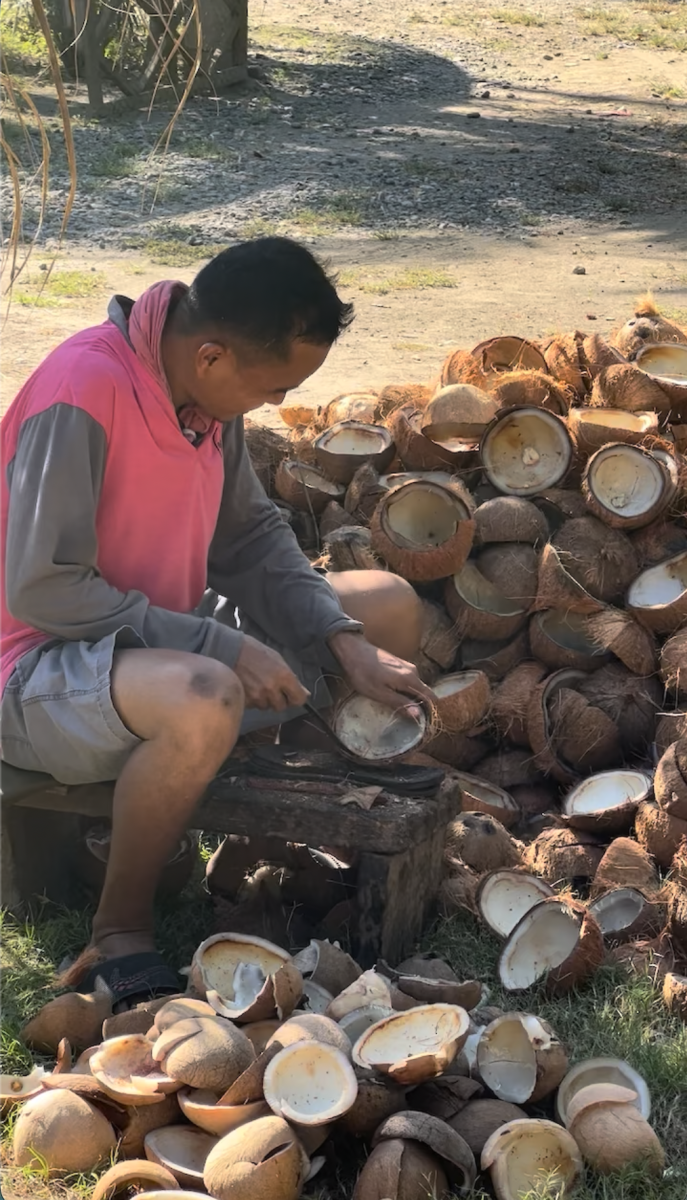
- Lugit (Separating): Removing the coconut meat from the shell.
- Drying (Bulad or Pagpugon): The final stage of drying the separated coconut meat, either by sun-drying (Bulad) or heat-drying (Pagpugon).
Step 1: Harvesting with the Panungkit
We harvest coconuts once every three months. While some workers in other parts of the country climb the coconut tree to harvest, harvesting in our town requires hooking the coconuts from the tree using a panungkit.
The panungkit is a long pole made of several fitted bamboo pieces, designed to reach the necessary height. The sungkitero (harvester) attaches a sharp sickle, or karit, to the end of the pole to cut the coconut stem. A critical skill in this process is selecting only bunches aged enough to be processed into copra; harvesting young coconuts results in wasted resources.
Steps 2 and 3: Gathering and Transporting (Tapok and Hakot)
The mananapok (gatherer) and the karitoneros (cart drivers) follow the sungkitero as he hooks the nuts from the tree. They gather all the nuts that fall from the tree, load them into the kariton, and transport them to the koprasan (processing area).
A kariton is a carabao-drawn, two-wheeled cart. It normally carries several hundred nuts per trip.
Once the nuts are in the koprasan, we count and group them by thousands. This grouping is important because the mangoprasay (coconut workers) are paid per thousand coconuts processed for specific tasks:
- Gathering and bringing nuts to the koprasan.
- Unhusking the nuts.1
- Cracking, sun-drying, lugit, and sacking the final copra.
- Drying the coconuts in a pugon
Steps 4 to 7: Preparation, Cracking, Drying, and Separating the Meat
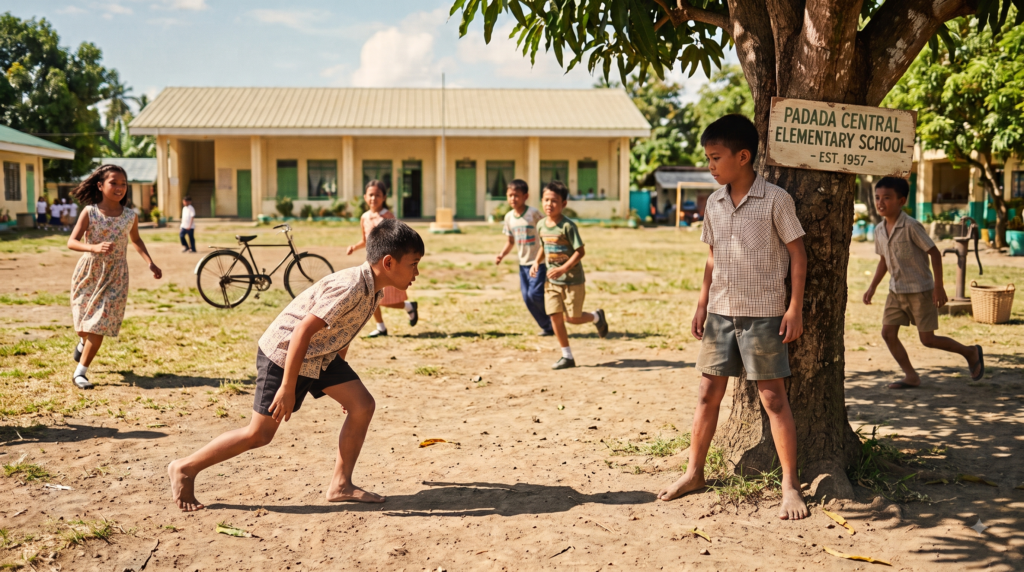
During the summer, I sometimes volunteer to process two to three thousand nuts for my lolo (grandfather), who owns several hectares of coconut land in our barrio (village).
Preparation and Cracking ( Buak and Bunot)
The process begins with a choice: we can either husk the nut first (bunot) and then use a bolo to crack the husked shell in half, or we can crack the whole, unhusked nut directly using an ax. When using an ax, I can usually find my rhythm after splitting about ten coconuts, allowing me to cut them cleanly in half with a single swoop. Cracking the nuts open is at least a full day’s work.
Drying and Separating ( Bulad, Lugit, and Pagpugon)
Once the nuts are cracked, we begin the drying process. For those relying on sun-drying (bulad), the opened nuts are set out during the dry season for at least two full days. To maximize drying, the inside of the coconut faces the sun early in the morning. If rain is expected, the halves are turned over with the inside facing down.
After this initial drying, the meat is dry enough to be separated from the shell, a process called lugit. Separating the meat is also a full day’s work.
The separated meat must be dried further until it is ready to be sold as copra. This final drying stage can be done in one of two ways:1
- Sun-Drying ( Bulad ): Since we do not have a pugon (furnace), we dry the separated meat for several more days. The meat should become copra after about five days of total drying.
- Heat-Drying ( Pagpugon ): For those with a pugon, the coconut meat is placed in the special furnace used for drying. This accelerated process typically takes only about a whole day.1
Alternative Uses and By-products
Not all coconuts are processed into copra. Alternatives include:
- Selling Whole Nuts: We can husk the whole nut (bunot) and sell it as a whole nut.1
- Charcoal: We can split the nut open (buak) to get the coco shells, which are then processed and sold as charcoal.1
- Firewood: The outer shell material, or bukong (which is available if the nut wasn’t unhusked), is sold by the kariton (cartload) to be used as firewood. When I was younger, bukong was commonly used for cooking by households without LPG or a gas stove.
Earning and Waiting
We get paid per thousand coconuts we process for specific tasks:
- Gathering and bringing nuts to the koprasan.
- Unhusking the nuts.
- Cracking, sun-drying, lugit, and sacking the final copra.
- Drying the coconuts in a pugon.
The money we get paid per thousand coconuts isn’t much—just enough for a week’s baon (allowance). While waiting for the coconut meat to dry into copra, , we fill our time with other activities. In our case, we walk towards the beach and gather shells, try to catch some fish, or just swim with friends. But it’s a good feeling, knowing I helped out.
Email: nicgabjr@gmail.com X: @nicgabunada.com