Series: Game of Titos and Titas - Part 10
Key Takeaways
- Takyan is the Bisaya name for the game Tagalog areas call sipa
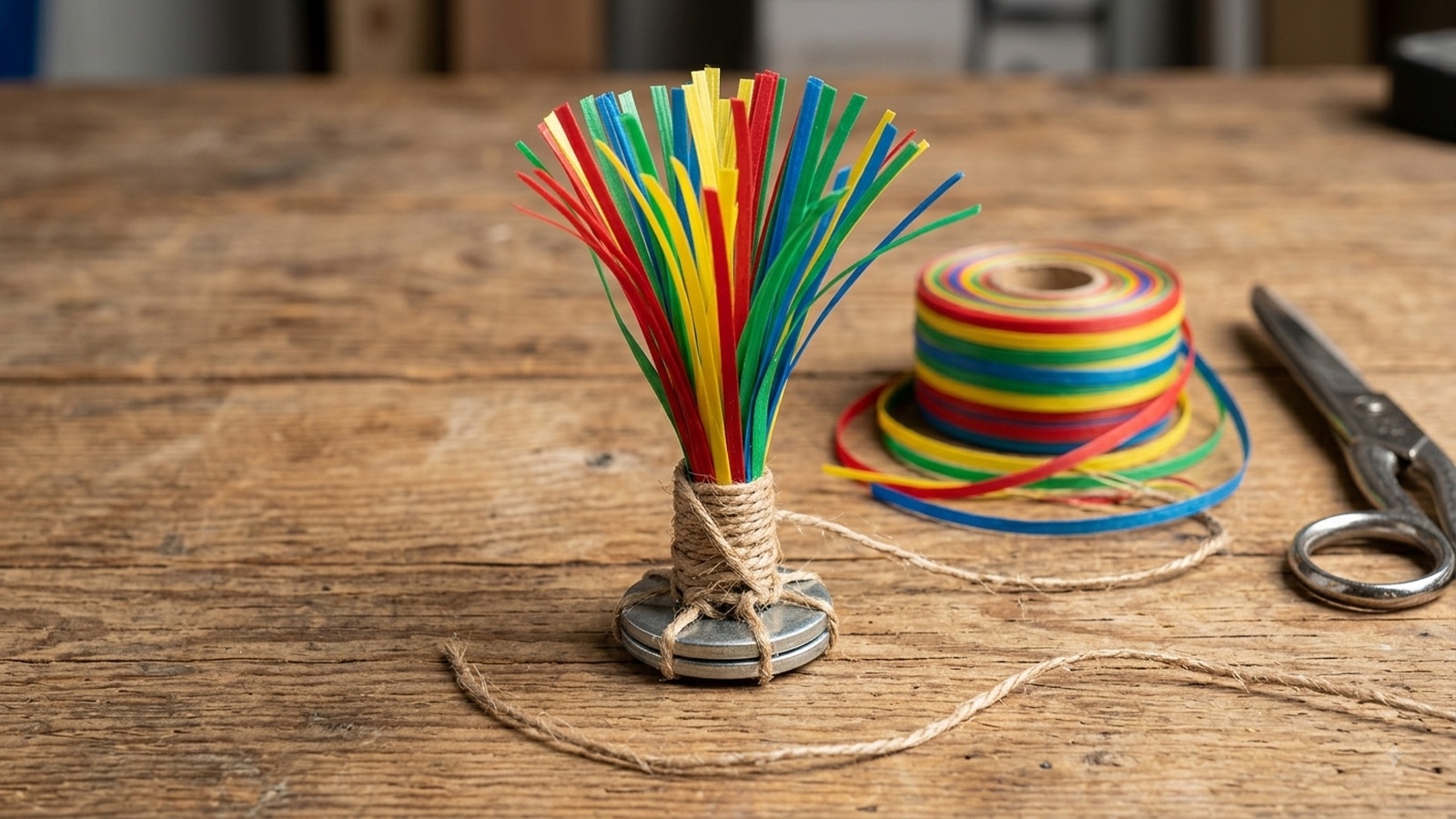
- You made your own: one or two washers, a holed coin or a flattened bottle cap for the base, a tail of plastic ribbons or chicken feathers, bound on with a rubber band or string
- The trick was balancing the tail — trimming plastic, or arranging feathers — so it fell base-first every time
- Boys kicked off the inside of the foot, girls off the outside — mirror-image techniques, and the girls’ was the harder of the two
- It ran from elementary through the middle of high school — the longest-lived game we had
- You won by reaching an agreed number of consecutive kicks — a number both sides settled before starting
- Style counted for nothing. A scuffed kick that kept the run alive scored the same as a clean one
- The loser’s punishment could be reversed: kick the takyan back out of the air and the winner becomes the loser
Whenever I think back to my childhood in Padada, I can almost hear it: the rhythmic metallic clink of a takyan coming down on the pavement.
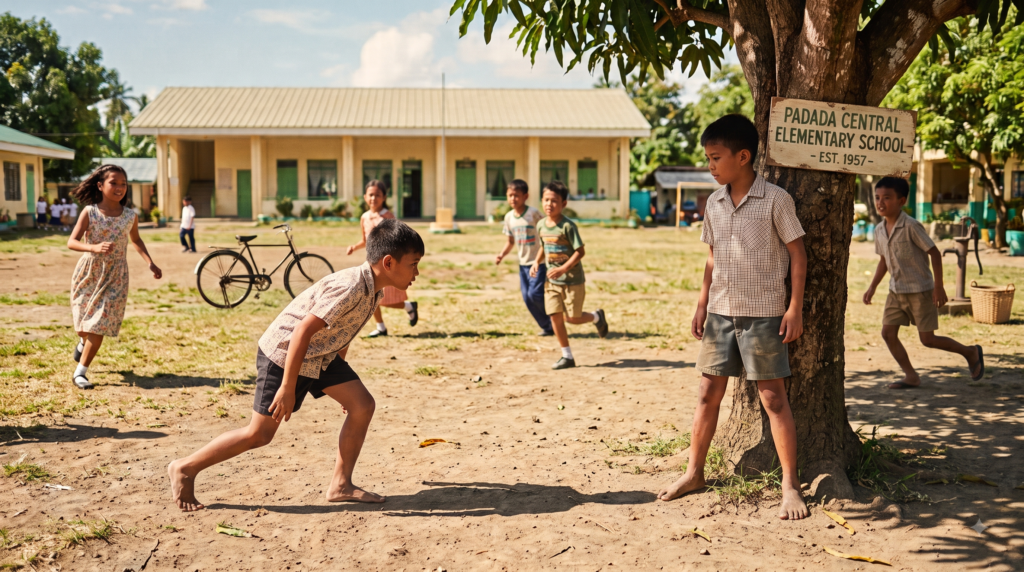
It was our favourite street game and a staple of school life, from my elementary days right through high school. In Tagalog areas they call it sipa. To us it will always be takyan.
It did not matter whether you were a boy or a girl. We all gathered in the courtyards, using feet, knees and elbows to keep that small weighted toy dancing in the air.
Two kicks, mirrored
I remember clearly that we did not all play it the same way.
We boys kicked off the inside of the foot, the leg swinging up through the middle of the body. That was the method — the obvious one, and the easy one.
Nobody was showing off with it. Height and power win you nothing in takyan, because the only thing being counted is whether the takyan came down. So you did whatever kept the run alive: a high kick when you had time, a low scuffed one when you did not, hard or soft depending on where the thing was falling. Ugly counts the same as elegant.
What we did do was count out loud, and a long run was worth bragging about. We made sure everybody heard it.
The girls kicked off the outside of the foot, the leg swinging up and away from the body.
Those two are mirror images of each other, and they are not equally easy. The inside of the foot gives you a broad flat surface and a natural swing; you are kicking the way you would pass a ball. The outside gives you a narrow one, and it asks the hip to rotate outward while the ankle turns in — an awkward arrangement that takes far more control to repeat cleanly.
So the girls were doing the harder version, and doing it well. It was a beautiful sight: dozens of colourful tails bobbing up and down across the school grounds.
How it is described elsewhere
Most written accounts of the game match this. Boys kick with the inside of the foot; girls use the side or outside of the foot, and sometimes the elbow.
Some accounts also describe boys going for high, powerful kicks as a matter of style. That was not our game. Ours rewarded survival, not spectacle — a scrappy low kick that kept the count going was worth exactly as much as a good one.
Where the documented versions go further is in adding levels — formal variations in which you must strike the takyan in sequence with the palm, then the elbow, then the knee, then the foot, turning the game into a test of precise coordination rather than power. Organised play sometimes sets the divisions explicitly, with one sex using arms and the other feet.
I have no doubt that is played somewhere. It simply was not what happened in our courtyard, where nobody had heard of a level and you kicked until you missed.
Making a takyan
We rarely bought our toys. Half the fun was in the making.
1. Find your base. A metal washer, a large coin with a hole in it, or a flattened soft drink cap. The weight is what makes the takyan fall properly, so this is the part that matters most.
One washer usually did it. Two if the first was light. Never more than that — pile on any more and the takyan drops too fast to get your foot under.
The washers came from the driver-mechanic in the neighbourhood — the ones he had thrown out. Worn, wrong-sized, no further use to him. We went through his discards the way you would go through a shop.
The bottle caps needed no supplier at all. They were on the ground outside every sari-sari store in the country, and flattening one cost you nothing but the effort.
2. Make your tail — plastic or feathers. Flatten plastic candy wrappers or coloured shopping bags and cut them into thin ribbons. This is where the colour comes from, and we spent whole afternoons on it.
Chicken feathers did the job just as well, and we used those too. A feathered takyan is the older idea — it is what a shuttlecock has always been — and it flies differently: more drag, a slower fall, more time to get your foot underneath it. The plastic version is faster and less forgiving.
Which you made came down to what was to hand that week.
3. Thread and bind. Pass the strips or the quills through the hole in the base and bind them tight — a rubber band was what we mostly used, and string worked too when there was string. The binding has to hold, because everything after this depends on the tail staying put.
4. Spread it out. Fan the plastic, or the feathers, until it opens into a shuttlecock. What you want is a wide light crown above a small heavy base.
5. Balance it — and this is the real skill. Adjust the tail until the takyan falls base-first, every time, ready for the next strike.
With plastic that means trimming: too much and it drifts and tumbles, too little and it drops like a stone with no hang time. With feathers it is less cutting than arranging — you pull one out, turn another, even the crown up until it stops leaning. A feather tail can be perfectly full and still fall crooked if the quills are unbalanced.
Either way the problem is the same. You are balancing a light wide top against a small heavy bottom until the thing rights itself in the air on its own.
We had no words for any of that. We just kept adjusting until it fell the way it was supposed to, and then we stopped.
We had no words for the parts either. The washer was the washer and the plastic was the plastic. Only the finished thing was a takyan.
Everything in it was rubbish, except the rubber band
Look at the parts list: a washer somebody had finished with or a cap off a bottle, plastic that had wrapped a sweet or feathers off a chicken, and a rubber band to hold it together.
That last one is not incidental. The lastiko we spent whole seasons winning off each other in dampa and pitik turns up here as construction material. The currency of one game is the fastening of another.
I do not think we ever noticed. A rubber band was just something a boy had.
Other versions
I learned later that takyan has variations across the country, and mostly they come down to what you use for the base.
The bottle-cap version has a name — tsapa — which I did not know at the time. We simply used what we had, and what we had was often a bottle cap. There is also sipa tingga, which uses a heavy lead washer. That one I never played; lead is heavier than anything we put in ours, and it must fall very fast indeed.
The materials shift depending on where you are. The game does not. It is the same simple joy in a few scraps of plastic and metal wherever you find it.
How to play takyan
The playing is simpler than the making, which is the correct order for a children’s game.
1. Agree the target. Before anyone kicks, both sides settle on the number of successful kicks needed to win.
2. Keep it up. Strike the takyan with the foot — inside or outside — and keep it off the ground. Knees and elbows count.
3. Count out loud. Every clean kick is one, however it was struck. Let the takyan touch the ground and your run is finished.
4. First to the agreed number wins.
And there it is again. Before you could play takyan you had to agree what winning was, exactly as you had to agree the target score at syatong, the ante at holen, and the forfeit at the top-fighting. Not one of these games came with a number. You negotiated it, and then you were bound by it.
The punishment, and how to escape it
Every game in this series has a penalty for the loser. Takyan has the strangest one I have come across, because it is the only punishment anywhere in these posts that the loser can overturn.
Here is how it runs.
1. The loser throws the takyan to the winner — and throws it well.
This is the part that surprises people. The throw has to be a good one, because the winner may simply decline anything he does not like the look of. Refuse the throw and the loser has to go and fetch the takyan and throw again.
So a bad throw punishes nobody but the loser. It does not inconvenience the winner in the slightest; it only lengthens the loser’s own sentence.
2. The winner kicks it away.
3. Now the loser has one chance. If he can catch the takyan, the punishment stops and the game is over.
4. But if instead he can kick it — striking it out of the air, right after the winner has kicked it, before it lands — then the whole thing turns over. The roles reverse. The winner becomes the thrower. The loser becomes the one doing the kicking.
5. And it keeps going until somebody catches instead of kicks.
Sit with what that means for a moment.
In syatong you run the field and shout until your breath gives out. At tumba lata you are called baboy. At tigso you crawl through everyone’s legs. In every one of those, the punishment is a thing you endure — the outcome is settled and the ceremony is just the settling of it.
There is something else buried in that first step, too. The loser has to serve his own punishment properly. Throw badly out of spite and you gain nothing; you simply stand there longer. And a good throw is what gives the winner a clean kick, which is what gives the loser his clean chance to catch or strike back. The whole escape route depends on the loser going along with it in good faith.
Not here. In takyan the punishment is still the game. A loser with quick enough feet does not merely survive the penalty; they reverse it, and whoever won a moment ago is suddenly the one standing there being thrown to. The result is not final until somebody’s reflexes fail.
I do not know of another children’s game that does this. It means no defeat was ever quite finished, which may be the most generous rule any of us ever invented.
Three generations
We stopped somewhere in third or fourth year high school. The takyan went the way of other childhood things, put away without any particular ceremony.
I notice that it was not lack of time that ended it. We had time. Something else happens around fifteen or sixteen — the courtyard stops being the place you go, and a boy or a girl who would have spent an hour counting kicks the year before finds they no longer want to be seen doing it.
Then I had children, and it came back. It was a joy to sit with them and teach them how to kick, watching them try to beat their own count of consecutive strikes just as I once had.
Now I look at my apos, and I would like nothing better than to step into the yard and show them exactly how we used to play.
And not only the kicking. I would start where we started: a washer, a handful of wrappers, and an afternoon spent cutting plastic into ribbons.
That is the part that actually disappears. Nobody ever sat me down and taught me to kick — I learned that by trying. What I learned by watching was how to make the thing, and if I pass on anything at all, it should be that.
Frequently asked questions
What is takyan? Takyan is the Bisaya name for the Filipino street game known in Tagalog-speaking areas as sipa. Players keep a small weighted shuttlecock in the air using their feet, knees and elbows.
Is takyan the same as sipa? Yes. Takyan is the Bisaya term and sipa the Tagalog one. Regional versions differ mainly in what the base is made of.
How do you make a takyan? Thread the tail material through one or two metal washers, a holed coin or a flattened bottle cap, bind it tightly with a rubber band or string, and spread it into a shuttlecock shape. The tail is either strips cut from plastic candy wrappers and shopping bags, or chicken feathers. Then adjust it — trimming the plastic, or rearranging the quills — until the takyan falls base-first every time.
What is a takyan made of? A weighted base — one or two metal washers, a coin with a hole, or a flattened soft drink cap — and a tail of either plastic ribbons or chicken feathers, bound to the base with a rubber band or a length of string.
What is sipa tingga? A version of the game that uses a heavy lead washer as the base, rather than a plain metal one.
What is the tsapa version? A version that uses a flattened bottle cap as the base instead of a washer. It is one of the most common, since the caps cost nothing and are found everywhere.
How do you win at takyan? By being first to reach an agreed number of successful kicks. The target is settled between the players before play begins; a kick counts as long as the takyan does not touch the ground.
What is the penalty for losing at takyan? The loser throws the takyan to the winner, who kicks it away. The throw must be a fair one — the winner can decline a poor throw, leaving the loser to fetch it and try again. If the loser then catches the takyan, the penalty ends. But if he manages to kick it out of the air instead, the roles reverse and the winner becomes the one being thrown to — continuing until somebody catches rather than kicks.
Did girls play takyan? Yes, and they were often better at it. Boys kicked with the inside of the foot, swinging the leg through the middle of the body; girls kicked with the outside of the foot, swinging it away from the body. The outside kick is the harder of the two — a narrower striking surface and an awkward outward rotation of the hip.
For the bona fide titos and titas out there — did you play takyan, or sipa, or something else again? What did you use for the base, and did you kick with the inside of the foot or the outside? Tell me in the comments.
Game of Titos and Titas — the full series
- Lastiko: The Filipino Rubber Band Games We Played as Kids
- Birus: The Filipino Hide-and-Seek Played by Moonlight
- Holen: How to Play the Filipino Marble Game
- Syatong: How to Play the Filipino Stick Game
- Jackstone: The Game of Skill and Flair
- Tumba Lata: What We Called Tumbang Preso Back Home
- Tubig-Tubig: The Game We Drew With Water
- Tigso: The Golden Hour of Our Lunch Breaks
- Takyan: The Sound of Our School Courtyards (you are here)