
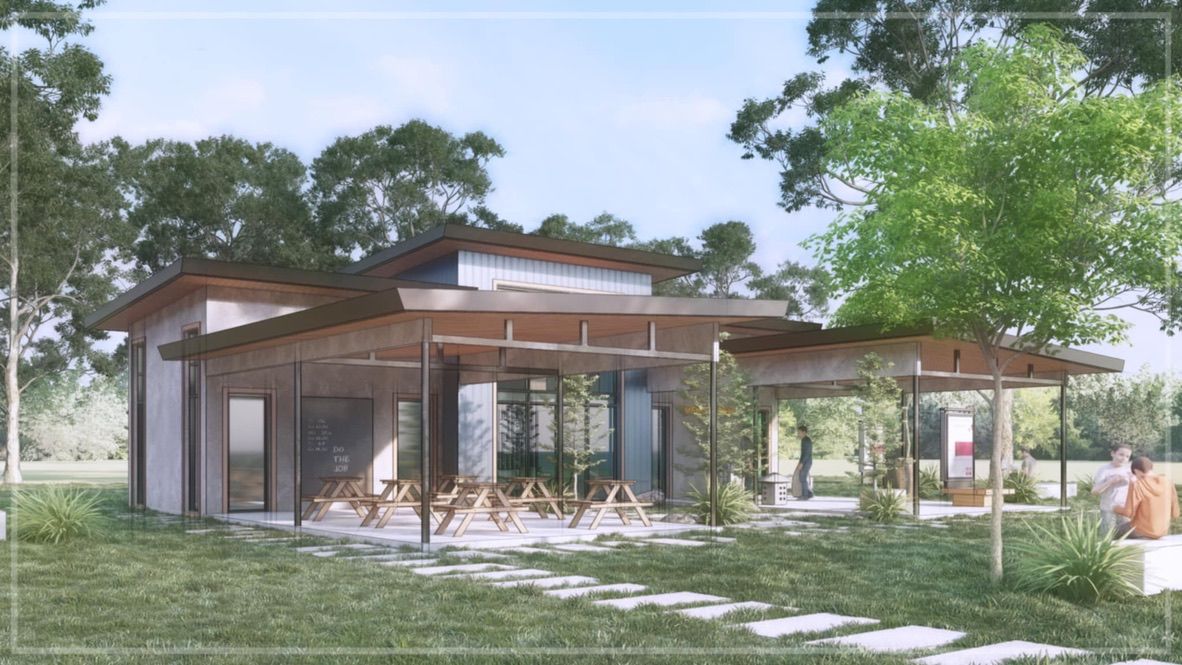
For the longest time, one of the long-standing items in my bucket list is to set up a library-museum in my hometown of Padada, Davao del Sur.
There are no museums in Padada. The only libraries are those that are in the two private schools in town. It’s very rare to find someone in Padada whose pastime is reading.
Everyone has their phones anyway, and the instant gratification that social media brings is more accessible (and more addicting) than books. If they’re not on their phones, they’re just sitting around, gossiping, or drinking – what else is there to do?
Nothing New, but Something Uncommon
It might not be an extremely novel idea, as there are small libraries and museums in other towns. However, in the Philippines, it’s not a very common one either.
There are initiatives like the pop-up library in Ayala Triangle, where you can get books for free, and people are encouraged to donate books as well. But when was the last time you were in the provinces, and you saw a pop-up library?
For someone who lives in places like Padada, there’s really no incentive to read. Books cost money, and why would you spend on a book when you can just buy gin for a fraction of the cost?
Visiting museums, I think, is an even rarer pastime. Maybe in the bigger cities like Manila, where the spectacle and grandeur of say the National Museum is something that attracts visitors; but in small provinces, no one even thinks of visiting museums. Aside from not having any, why would you spend time (and money) to go look at old junk?
Imagine, for a Minute, the Possibilities
But what if you had the option?
Imagine a place where you can just pick up a book to read. You don’t even have to go that far, as it’s just a few blocks away from your house.
No entrance fee – everyone is welcome. It is by no means a big building, but it is well-lit and well-ventilated. Rows of books on all sorts of topics can be found on the shelves. There are novels and history books, but there are also children’s books and magazines. The staff are friendly, and would recommend books to you, depending on your mood. You can even read about the history of Padada, or some books by authors that came from Padada.
Outside is a garden, with several reading nooks. You can read in the gazebo, or even under the mango tree and enjoy the breeze.
As you walk to your spot, you can see the exhibits outside. A karomata (kariton in Bisaya) and balsa which traditionally areused by farmers to cart their produce to the market. An araro (daro in Bisaya), well-preserved and pretty much functional, right before it was replaced by the modern tractor. A kaguran, that still works, with a cluster of coconuts piled up beside it; visitors can use it to experience the old-school grater.
All the exhibits have didactics that explain where the tools came from, what their purpose is, and how do people use it. They show what the old inhabitants of Padada use in their daily lives.
A Place Bustling with Activity
And as you get to your spot by the mango tree, you can see the children running around the garden, playing traditional games like piko or luksong-baka. Part of the activities for the day involves a resource person who will teach the children these traditional games. There are several activities and seminars throughout the year that anyone can attend as long as they sign up.
In addition to the traditional games, another resource speaker is in the multimedia hall. They are conducting a seminar on cacao farming; a lot of the local farmers signed up as they were promised not only to know about the best practices of growing cacao, but they will also be given their own seedlings to start growing it on their own.
At the main exhibit hall, past the rows of the main collection of fiction and non-fiction books, is this month’s showcase. A Slice of Life in Padada – an exhibit of old photos sourced from residents around town, showing how their grandparents and great-grandparents lived during their time. It was a collaborative effort from the contributors, who were proud to share their stories with the rest of their townmates and offer a glimpse of what life was like back then in Padada.
A Reason to Come Back Home
It’s exciting to think of the possibilities – right now though, I’m still in the stage of figuring out the structure, and getting the necessary building permits to start the construction. There are still a lot of question marks on the overall layout of things, and I hope I could get inputs from other people.
It’s going to be in Lower Limonzo, in the “kumon” that belongs to my family. This is where I was born, and I want to turn it into something that enriches the lives of my fellow townmates.
I like to think of it as a sort of giving back to the community. It could be a community center of sorts, where the main draw is not just the books or the artifacts. I want to have regular seminars on topics that could enrich the community as a whole, so they have a reason to visit the place. It could be different livelihood trainings, like the above-mentioned cacao planting or weaving or anything that could be useful for people.
And maybe, after each seminar, they’d be encouraged to pick up a book and start reading.
These are just some of the ideas off the top of my head. What is important for me right now is to set everything up first. Hopefully, if all goes well, the structure and the general layout of the area will be ready by next year. And it would give me even more reason to come back home.