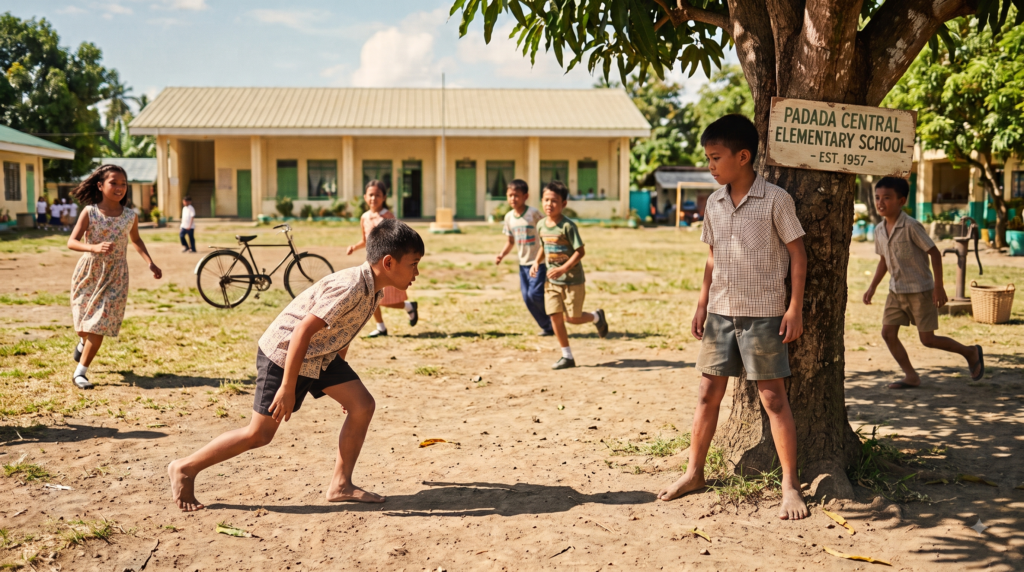
Limpya Bota is a lost art. It was once a ubiquitous part of life, before the advent of those do-it-yourself liquid shoe polish that you buy at the grocery store. You shake it, press it directly on the shoe, slather it all over the surface and you are done. Convenient, yes, but soulless.
In Cebuano, Limpya means to clean up, and Bota means boots. It’s exactly the same in Spanish, although with a slightly different spelling. Shoe shiners are called limpiabotas both in Madrid and in Padada. At one point in my past, I was proud to be one of them.
You see, it was the 70s. Money was tight, and Papang was still recovering from his accident. We had to pull our weight so the siblings and I did some odd jobs here and there to earn a few pesos.
A Promise Fulfilled
My cousin fulfilled his promise and gave me a shoe shine box. I was ecstatic for the opportunity to earn some more, but I didn’t know where to start. My neighbor Sammy, a Limpya Bota himself, showed me the ropes.
I will forever be grateful to both of them. Shining shoes did not only put food on our table, but also exposed me to the realities of life.
There was an art to it, a specific way of getting the die mixture (called dyobos) right. There was a method of curing the polish so that the leather absorbs it properly. The intricacies are in this old blog post if you want to look. It is the 1st of a series of entries I planned on Limpya Bota. Maybe I can write some more?
But apart from the “technical” stuff, what I think is a big part of the service is the community aspect – the conversations.
Shining Shoes, Sharing Stories
I learned to listen to these stories of these grown men while shining their shoes. I had a few regulars – some were silent during the whole thing, but some wanted to talk. Most were just banter, but some shared their hopes and their fears. Quite a few shared their dreams.
I was a boy; mostly, I just listened. But sometimes they asked for my opinion. I had a habit of not giving straight answers. Instead, I gave my opinion by asking them what-if questions, or I would share anecdotes from other people to explain what they did in similar circumstances.
I was not the best shoe shine boy in the market. However, a lot of customers looked for me when they wanted their shoes cleaned.
It was during this time of being a Limpya Bota that I experienced a fundamental truth. People liked stories; some like to tell them, some like to listen to them. Tell them the right story, and they come back to you for more. Sometimes, they become loyal clients and help you make ends meet. They help put food on the table.
Nothing but Grit and Resolve
I was a Limpya Bota for four years. When I wasn’t busy studying, I was shining shoes and talking with people during weekends and holidays. Eventually, I taught my brother Rey to shine shoes as well. Our earnings from shining shoes sustained us the whole time Papang was recuperating.
I earned around 20 centavos per customer, to up to 1 peso for adding steel spikes to the shoes which was popular at the time. This money not only covered my day-to-day allowances, but also I was able to help out with some expenses at home.
Recently, I came across this painting of Pablo Amorsolo called Limpia Botas online, and my days of being one of them came rushing back in.
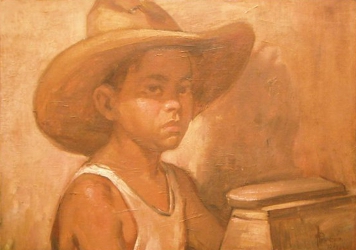
Source: https://commons.wikimedia.org/wiki/File:Limpia_Botas_by_Pablo_Amorsolo.jpg
I can identify with the steely resolve on this boy’s face as he poses beside his equipment. He may be a boy, but he definitely knows what he is doing. He might be all business, but he has his story to tell, and you can tell him your stories too.
I look back at my life in Padada and that little boy with big dreams that run on nothing but grit and resolve, and I can’t help but smile.
Part 4 of 4