Series: Game of Titos and Titas - Part 8
Key Takeaways
- Tigso is the Bisaya name for the game known in Tagalog areas as agawan base
- Two teams of five to eight, two bases — a pole, a tree, a rock, whatever the schoolyard offered — and a bantay who never leaves his
- The core rule: you may only tag someone who left their base before you did
- Get tagged and you stand prisoner in enemy ground until a teammate breaks in and touches you free
- The bantay could leave the base to make a tag — but the base stood unguarded while he did
- The losing team crawled through the stretched legs of every winner: “Kamang ang mga pildi!”
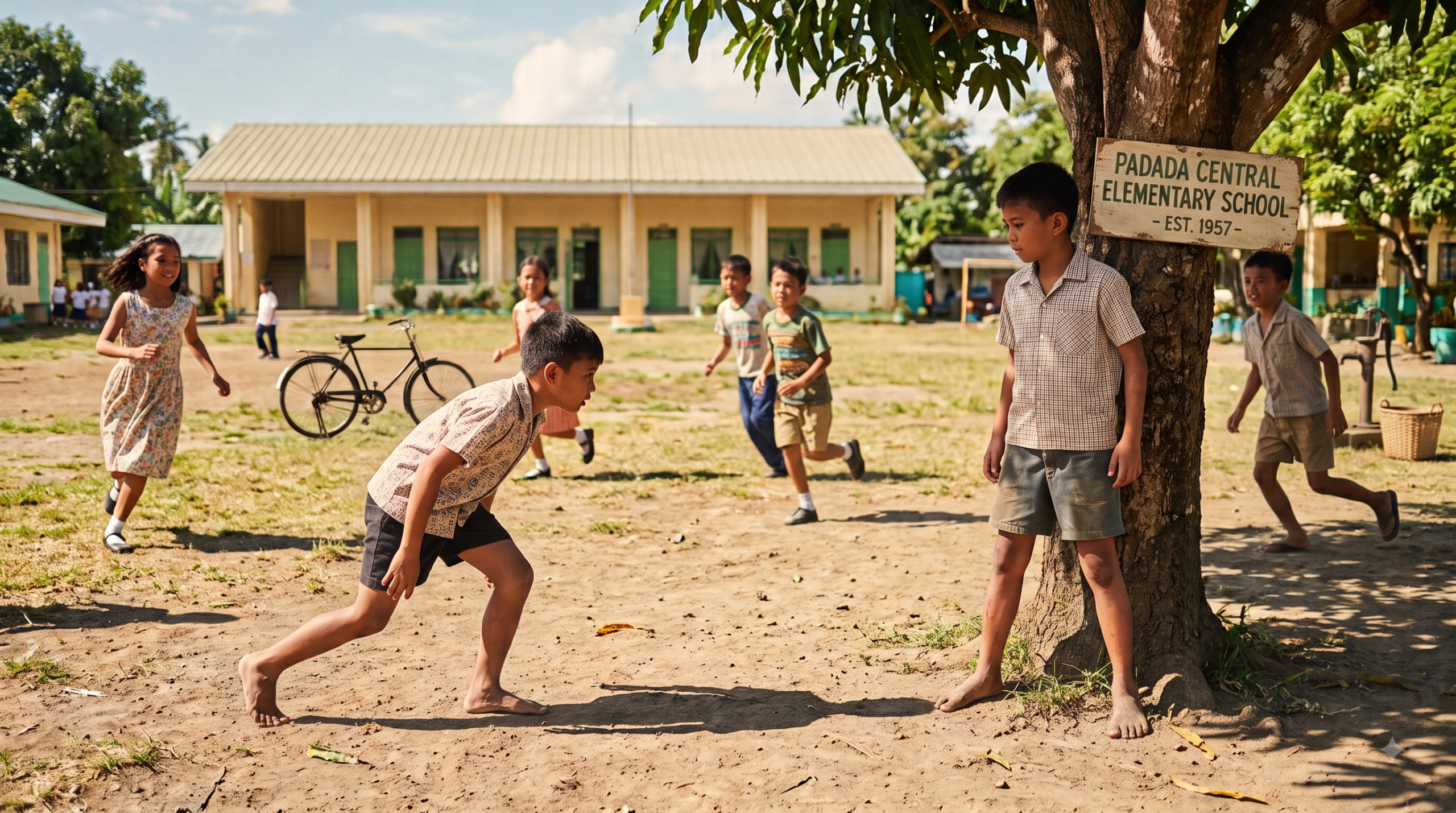
In grades four and five, the school bell was not the end of a lesson. It was a call to arms.
Run home. Eat lunch as fast as decency allowed. Run back to the school grounds before anybody else claimed the field.
The break was never really about the food. It was about those frantic, dusty, exhilarating minutes on the field playing tigso — a stretch of time when the world narrowed to the heat of the sun and the distance between two bases.
What tigso is
Tigso is what we called it. In Tagalog-speaking areas the same game goes by agawan base — seize the base.
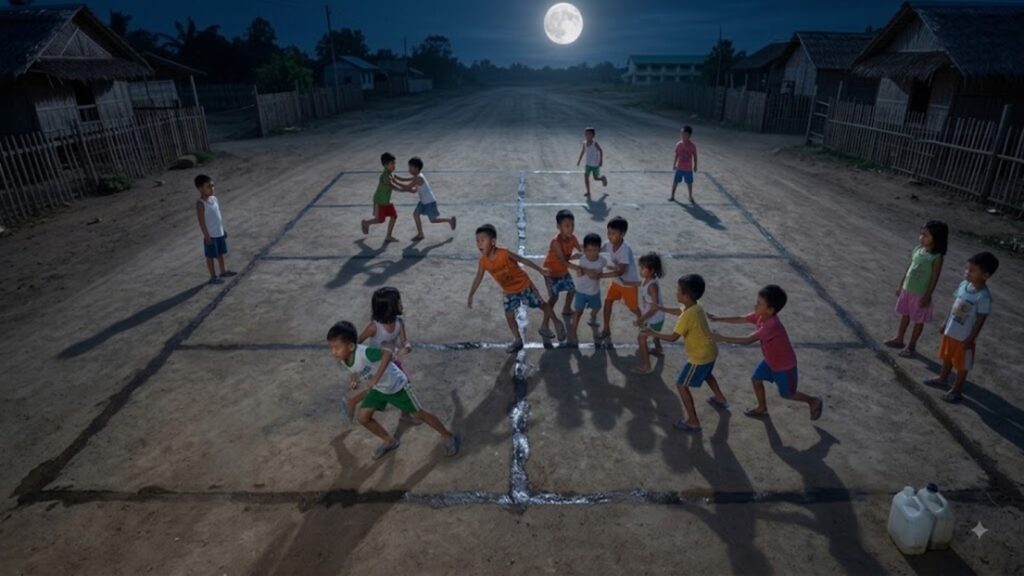
It needs almost nothing. Two poles, two trees, two rocks — whatever the schoolyard offered up as a marker. One becomes your base and the other becomes theirs, and everything that happens for the next thirty minutes happens between them.
Whatever it was, it stopped being ordinary the moment the game started. A rock that had been lying in the dirt all morning became the sacred rock of the base, the thing you defended and the thing they were coming for.
Five to a side was the working minimum, and one of those five was the bantay — the guard who stayed with the base and did not leave it. Most days we had more. Seven or eight a side was ordinary.
There was no roster and nobody was picked in advance. You played with whoever got back from lunch in time, and the teams were made on the spot to match. If eleven turned up, somebody sat out or the sides ran uneven and nobody minded much.
That word again. In tumba lata the bantay watches a tin can; here he watches a rock.
But the tigso bantay is not nailed down. He could leave — and often did, if an opponent strayed close enough and he fancied his chances of a tag.
That is the guard’s whole dilemma in one movement. Step off the rock and you might take somebody out of the game. Step off the rock and the rock is unguarded, and there is always somebody watching for exactly that.
How to play tigso
1. Pick your bases. Two markers, a good distance apart. A pole, a tree, a rock, a post — anything both sides agree on.
2. Split into teams and post a bantay. Five a side at minimum, though seven or eight was more usual. One player from each team guards the base; everyone else runs.
The bantay is not fixed to the spot. He may leave it to chase or tag an opponent who has come too near — but the base is unprotected while he does.
3. Understand the one rule that matters. You may only tag an opponent who left their base before you did. Anyone who came out after you can tag you.
4. Raid. Run at the enemy base, dodge whoever has the right to tag you, and try to touch it.
5. Get tagged and you are a prisoner. You stand in enemy territory and wait. You cannot move and you cannot help.
6. Prisoners are freed by a touch. A teammate has to break through and reach you. One touch and the spell is off.
7. Touching the enemy base wins it. Get past the last defender, put a hand on their rock, and it is over.
Why nobody stayed out long
That third rule is the whole game, and it took me years to appreciate how neat it is.
Your power in tigso is not speed or size. It is how recently you left home. The moment you step out, you can catch everyone already on the field — and every one of them is now safe from you the instant somebody newer comes out behind them.
Which means your advantage decays. The longer you stay out, the more players have emerged after you, and the more people can take you. A hero who has been running for two minutes is the most vulnerable person on the field.
So you touch home and go out again to refresh yourself. The game pulses — out, back, out again — and it does that without a clock, a referee, or anybody keeping track of anything except the order in which people left a rock.
With sixteen children on the field, that order is churning constantly. Somebody is always newer than you. You can hold an advantage over half the field and be prey to the other half at the same moment, and both halves change every few seconds.
I have never come across another children’s game that does this. It hands power to whoever is newest, and it takes it away simply by the passage of time.
The prisoner
There is a particular kind of waiting in tigso that I can still feel.
You have been tagged. You are standing on enemy ground, useless, watching your own side. You cannot call out advice that anybody will follow. You can only hope somebody decides you are worth the risk — because coming for you means running deep into their territory with everyone able to take them.
And then somebody does. One touch, and you are running again.
Everybody played
Tigso was for everyone, boys and girls alike, which was not true of every game we had. Holen was ours. Jackstone was theirs. Tigso belonged to whoever got to the field.
We coordinated in whispers. Who stays and guards, who risks everything and charges. We still remember which classmates ran fastest, which ones could not be tagged, and which ones were quick-witted enough to always find the way in.
The teams never had names. We only named the outcome, afterwards: napildi sila — they lost. Kami ang nidaug — we won.
What the losers had to do
The stakes were real, because the losing team had to pay.
“Kamang ang mga pildi!” — crawl, losers.
Every member of the winning team stood in a line with their legs apart, and the losers crawled through, one at a time, the length of it.
Notice what does and doesn’t have a name here.
There was no word for a prisoner. You stood in enemy ground, tagged and useless, and nobody had anything to call you — because nobody needed to say anything to you or about you.
But the forfeit had a name, and the name is a sentence. Not a noun for the punishment, a shout for starting it. Kamang ang mga pildi. That is the rule of this whole series turning up again: children name what they have to shout, and nothing else. Nobody shouts at a prisoner. Everybody shouts when it is time to crawl.
By now the punishment itself will sound familiar. The syatong losers run the field shouting until their breath gives out. The fumbling jackstone player is called baboy. The bantay who cannot escape at tumba lata is called baboy too.
Not one of these games has a ceremony for winning. Every single one has an elaborate, well-practised procedure for losing. I do not think that is an accident, and I am no longer sure it was cruelty either. It was how you settled the thing without an adult — publicly, immediately, and survivably — so that everybody could come back the next lunch break.
Which we did. Every day, for two years.
Frequently asked questions
What is tigso? Tigso is the Bisaya name for the Filipino outdoor game known in Tagalog-speaking areas as agawan base. Two teams each defend a base and try to touch the opponent’s.
Is tigso the same as agawan base? Yes. Tigso is the Bisaya term; agawan base — literally “seizing the base” — is the Tagalog one.
What is the main rule of tigso? You may only tag an opponent who left their base before you did. Anyone who came out after you can tag you instead, so a player’s advantage fades the longer they stay on the field.
What happens when you are tagged in tigso? You become a prisoner and must stand in the opposing team’s territory. You are freed when a teammate breaks through and touches you.
How many players do you need for tigso? Five a side is the practical minimum, including the bantay who guards the base, though seven or eight a side was more common. Teams were made on the spot from whoever turned up.
How do you win at tigso? By getting past the defenders and touching the opposing team’s base.
What is a bantay? The player who guards the base. Unlike the guard in tumba lata, the tigso bantay may leave his post to tag an opponent who strays close — at the cost of leaving the base undefended.
What happens to the losing team in tigso? They crawl through the stretched legs of every member of the winning team, called by the shout “Kamang ang mga pildi!” — crawl, losers.
For the bona fide titos and titas out there — did you play tigso, or agawan base, or something else again? What did you call the prisoners, and what did your losing team have to do? Tell me in the comments.
Game of Titos and Titas — the full series
- Lastiko: The Filipino Rubber Band Games We Played as Kids
- Birus: The Filipino Hide-and-Seek Played by Moonlight
- Holen: How to Play the Filipino Marble Game
- Syatong: How to Play the Filipino Stick Game
- Jackstone: The Game of Skill and Flair
- Tumba Lata: What We Called Tumbang Preso Back Home
- Tubig-Tubig: The Game We Drew With Water
- Tigso: The Golden Hour of Our Lunch Breaks (you are here)