
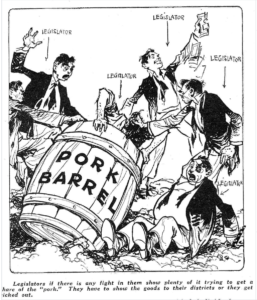
When people talk about “pork barrel,” they often mean the old PDAF days — discretionary slush funds handed to lawmakers for projects that sometimes never materialized. But to say pork barrel is gone would be naive. It didn’t disappear; it changed its face — into budget insertions, unprogrammed funds, and discretionary realignments that skirt executive vetting. It’s important to look at the real cost of pork barrel, as these create the same opportunities for abuse.
Insertions, FLR, and unprogrammed funds – not illegal, but could be immoral
After the Supreme Court struck down PDAF in 2013, direct lump-sum allocations to lawmakers were outlawed. What replaced them is subtler: lawmakers now push insertions into the General Appropriations Act (GAA), or tap “for later release” (FLR) designations and unprogrammed appropriations. These mechanisms let projects be slipped into the budget without the same level of technical vetting the executive branch normally requires. That’s where the risk lies. Ex-Senator Franklin Drilon and other budget-watchers have bluntly called insertions the modern face of pork.
As per Drillon, “the insertion itself is not illegal. It could be immoral, but it’s not illegal”. It’s pork barrel, but with a more palatable, “legal” face.
Billions now, compared to Pork Barrel’s millions back then
The scale is not trivial. Senate Blue Ribbon chair Panfilo Lacson has flagged at least ₱100 billion in insertions by senators alone in the 2025 budget — funds that were effectively placed into the law as projects “for later release.” BusinessWorld and other outlets reported Lacson’s estimate and subsequent calls to tighten the process. That’s not PDAF-level hype. Instead, it’s hundreds of billions moving through a system that can be gamed.
Senator Lacson himself said that compared to the unconstitutional pork barrel, which reached millions, the current insertions now reach 100 billion – a staggering amount. Again, not illegal, but could be immoral.
The Flood-control Scandal: a case study in misallocation
Nothing exposes the stakes like the recent flood-control revelations. Field validations of thousands of DPWH projects have identified hundreds of alleged “ghost” flood-control projects. These are projects reported as completed but either not existing or so shoddy they provide no protection. DPWH briefings and multiple news investigations put the figure in the hundreds: early validations found 421 ghost projects in a sample of 8,000, and the tally later rose as the validation expanded. The Department of Finance has warned that these anomalies may have cost the economy over ₱100 billion between 2023 and 2025. Those figures represent real money that should have gone to protecting communities. Instead, it lined contractors’ pockets.
Ghost Projects are a real manifestation of misallocation or outright fraud. Although not proven to be directly related to insertions and FLRs, there is reasonable suspicion that these discretionary or poorly vetted funding mechanisms might have contributed to this. If one backdoor exists, might it not be logical to assume that there are others as well?
Why this still matters
When discretionary insertions are abused, three things happen at once: honest contractors lose business, essential services are underdelivered, and public trust collapses. Flood-control works that exist only on paper mean people remain exposed to deadly storms; health centers promised in the budget never comfort mothers in far-flung barangays.
Those are not abstract losses — they’re lives, livelihoods, and opportunity costs. The political euphemism “insertion” starts to look a lot like the old pork when the outcome is the same.
What should change — practical guardrails
Fixing this doesn’t require a constitutional rewrite. It demands transparency and discipline: open bicameral proceedings and publication of all proposed insertions. Public registries should show project scopes, budgets, contractors, and status. We need strict rules banning infrastructure insertions that bypass technical vetting.
Senators like Lacson have proposed banning infrastructure insertions entirely; others argue for better publication and tracking so the public can see who inserted what and why. Those are sensible starting points.
Same problem, different packaging
Pork barrel didn’t die in 2013 — it evolved. Budget insertions and unprogrammed funds are the new packaging for an old problem: discretionary money that can be diverted. The damage is the same — misallocated public resources, hollowed services, and citizens paying the price.
If we want a government that spends for the public good, we must insist that every peso in the GAA be traceable from line item to finished project. No more backdoors. No more ghost projects. The country deserves better.