
Series: Inside the Campaign
Fourth of Ten Parts
Reading time: 7 min read
Key Takeaways
- The Philippines is not one market — treating it as one is a strategic failure
- For nearly six decades, the country had no Bisaya president. We named that gap and turned it into fuel
- Our geographic plan: fortify Mindanao, consolidate the Bisaya base, penetrate Metro Manila
- Identity claims mobilize people in ways policy arguments rarely can
- Social media makes regional precision possible at national scale — use it
One of the enduring mistakes of national campaigns in the Philippines is treating the country as a single, homogeneous market.
It is not. Anyone who has spent time outside Imperial Manila knows this. The issues that keep a voter awake in Cotabato are not the same ones worrying a voter in Laguna. The cultural pride of a Cebuano is not the same as the civic identity of a Bicolano. The political grievances of Mindanao are not simply a regional variation of national themes — they are their own story, with their own history, and they deserve their own strategy.
We understood this early in the Duterte campaign. And we turned it into one of our most decisive competitive advantages.
The six-decade gap
Here is a fact we surfaced during the campaign that resonated immediately with Bisaya voters: for nearly six decades — since Carlos Garcia of Bohol left office in 1961 — the Philippines had not had a Bisaya president. Decade after decade of presidents from Luzon and Tagalog-speaking Visayas, while the Bisaya-speaking regions — among the most populated in the country — watched from the sidelines of national power.
We didn’t manufacture this grievance. It was already there, simmering. We simply named it and gave it direction.
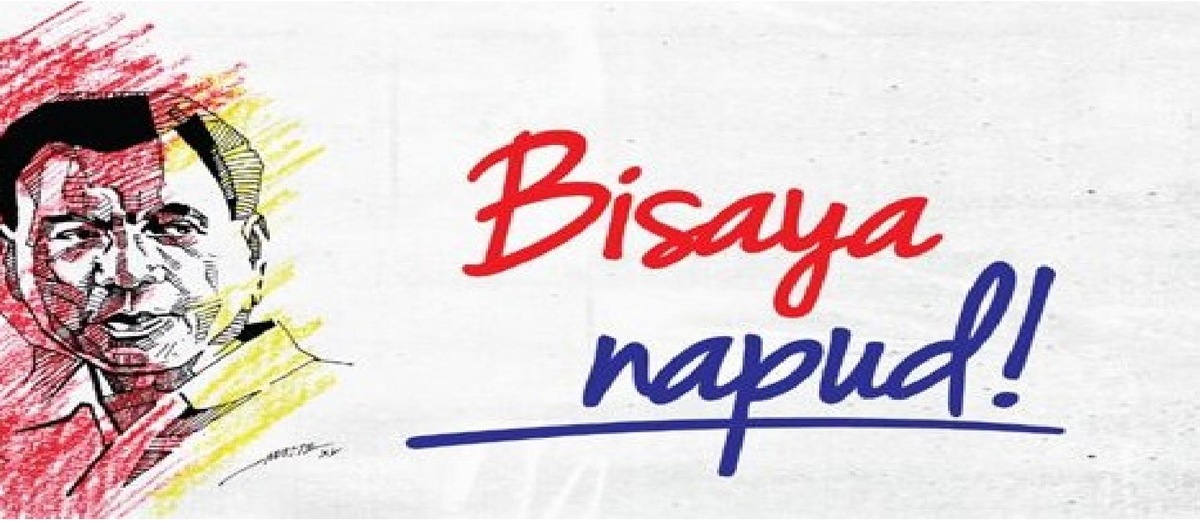
Bisaya na pud — it’s the Bisaya’s turn. The simplicity of that phrase belied its emotional power. It wasn’t a policy position. It was an identity claim. And identity claims, when they are genuine, mobilize people in ways that policy arguments rarely can.
Mindanao’s moment


Beyond the Bisaya identity, there was a deeper and longer-standing sense of neglect across Mindanao. For generations, politicians had visited the island during campaign season, made promises, and disappeared. Infrastructure projects were announced and delayed. Resources flowed north. The island that contributed enormously to Philippine agriculture, minerals, and trade felt chronically underrepresented in national decision-making.
Taga ato — one of ours. Duterte: Ato ni Pre, Ato ni Bai. Garbo sa Mindanao. — He’s ours, brother. He’s ours, sister. Mindanao’s pride. These weren’t campaign slogans invented in an air-conditioned agency office. They were phrases that emerged organically from the communities themselves, and we amplified them because they were true.
The geographic plan
Our strategy was straightforward, and I’ll share it plainly:
- Fortify Mindanao — make it unassailable. Duterte’s home turf had to deliver decisive numbers.
- Strengthen the Cebuano and Bisaya base — use regional identity to consolidate the Visayas.
- Penetrate Mega Manila — a complex market, but one heavily populated by Cebuano and Mindanaoan migrants who carried their regional loyalties with them.
- Don’t get clobbered in the rest of Luzon and Western Visayas — we didn’t need to win everywhere. We needed to minimize losses and let our base carry us.
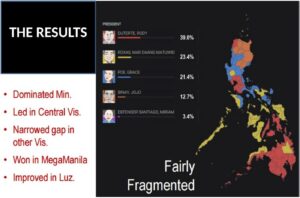
On election night, our numbers tracked almost exactly against that plan. We won big in Mindanao. We won big among Cebuano-speaking voters. We posted a modest but meaningful win in Mega Manila. We held our own in the rest of the country.
National reach does not require national uniformity. The best national campaigns are often collections of deeply relevant regional campaigns.
What this means for you
The Philippines is not one market. Treat it like one, and you will reach everyone without moving anyone.
Social media makes regional precision possible in ways that national TV never could. Programmatic targeting, regional page networks, community-specific content — these tools allow you to speak to a Mindanaoan voter about Mindanao’s story, and to a Cebuano voter about the Bisaya’s moment, without diluting your message for either.
For brand marketers, the same principle applies: a national campaign brief is not a reason to flatten regional differences. It is an invitation to build a campaign architecture that honors them.
Previously: Post 03 — How we framed the field → Next: Post 05 — Let a hundred flowers bloom: why UGC beats agency campaigns →