Key Takeaway
- I was always more comfortable making the campaign work than taking the bow — that became a management philosophy
- Coach, don’t command: people execute what they own, and they own what they helped figure out
- ‘We’, not I — the pronoun signals whether your team are instruments or partners
- Give credit publicly and genuinely; teams tha feel invisible do the minimum
- Leading from behind means being the steady hand nobody sees but everyone feels
Early in my career, I noticed something about myself. I was more comfortable being the one who made the campaign work than the one who got up on stage to take the bow.
Some people would call that a limitation. I call it a management philosophy: leading from behind.
What leading from behind actually means
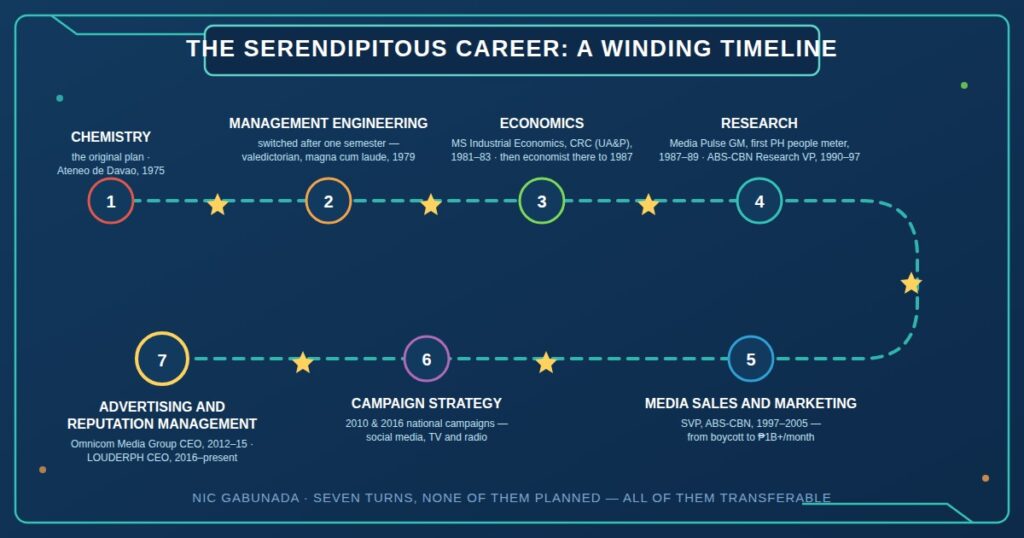
Throughout my career—spanning activism, CRC, Pulse Research Group, ABS-CBN, Omnicom Media Group, and various campaigns—I have continuously shaped and refined my leadership philosophy.
At the center of it is this: the best leaders I’ve known, and the leader I’ve tried to be, operate from behind.
Not because they’re hiding. But because they know the real job is to make the people around them excellent.
Here’s how that plays out in practice.
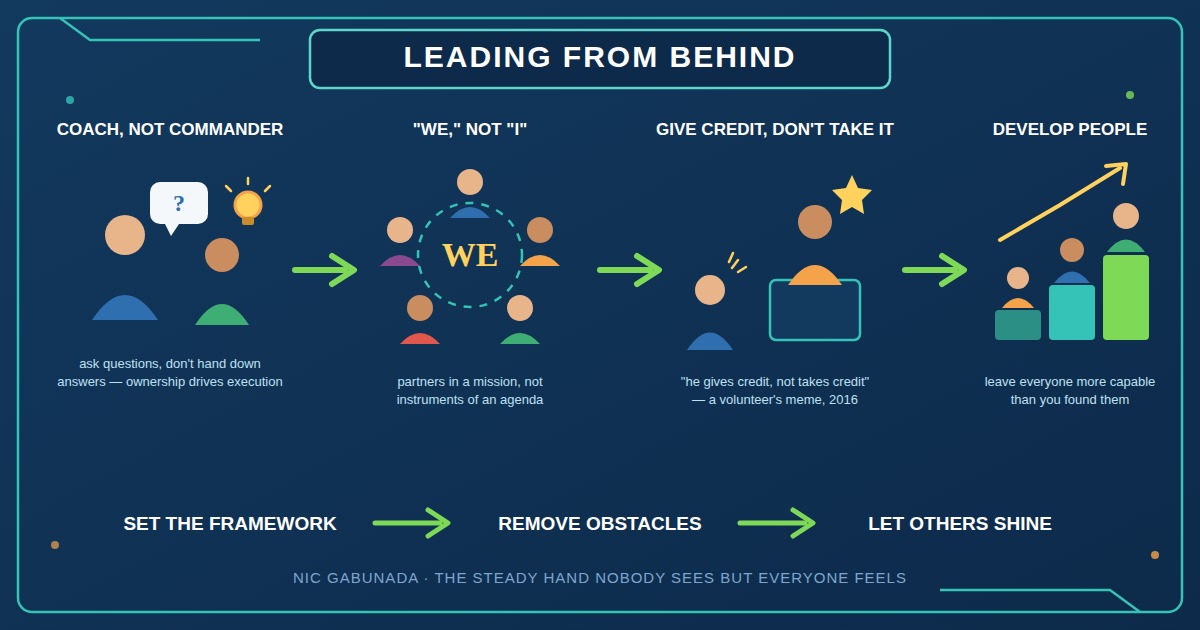
Coach, not commander
There’s a difference between telling someone what to do and helping them figure out how to do it better. The first approach is faster in the short term. The second builds something that lasts.
So I’ve always preferred to sit with my team, understand what they’re working on, and ask questions rather than hand down answers.
When people arrive at the solution themselves — with guidance — they own it. And ownership is what drives execution.
“We,” not “I”
This sounds like something from a motivational poster. But I mean it literally.
In meetings, in presentations, in conversations with clients — the pronoun matters. It signals to your team whether they’re instruments of your agenda or partners in a shared mission.
I’ve worked under both kinds of leaders. The difference in energy and loyalty is stark.
Give credit, don’t take it
During the 2016 campaign, one of my social media volunteers created a meme that captured how people experienced my leadership. One of the lines was: “He gives credit, not takes credit.”
I’ll be honest — that’s one of the things I’m most proud of in my professional life.
The instinct to hoard recognition is understandable. But it’s self-defeating. When your team knows their contributions will be acknowledged — publicly, genuinely — they work harder, take risks, and bring their best thinking forward.
When they feel invisible, they do the minimum.
Develop people, don’t use them
This is perhaps the most important distinction in leading from behind.
Some leaders view their teams as resources to be deployed and replaced. Others see their job as leaving every person they work with more capable than they found them. I’ve tried hard to be the second kind.
There’s a practical benefit beyond the ethical one. The people you develop become extensions of your capability. You can do more, reach further, and take on bigger challenges — because you’ve invested in a network of people who are genuinely good and who trust you.
Stay in the background — but stay engaged
Leading from behind doesn’t mean being absent. It doesn’t mean avoiding hard calls or letting the team drift.
It means being the steady hand that nobody necessarily sees but everyone feels. Setting the strategic framework. Removing obstacles. Providing the clarity that lets others move fast.
And I enjoy it — genuinely. Watching campaigns succeed. Watching people I’ve mentored get the credit. Watching brands and causes I’ve worked on break through. That satisfaction doesn’t require my name in the headline.
The takeaway
Over a career spanning more than 40 years across research, media, advertising, and campaign strategy, the consistent thread hasn’t been any single role or title. It’s been the practice of building teams, shaping strategy, and finding satisfaction in the success of others.
That’s what leading from behind means. And for those of us who do it this way — who find meaning in the win more than in the recognition — it’s the best job in the world.