MyDuterte Story Campaign Case Study: Scaling Authentic Personal Narratives
Key Takeaways
- One instruction to volunteers: “Tell your Duterte story.” No template, no brief, no format required
- The most credible voice in any campaign is always an ordinary person telling the truth
- Stories came in every format — essays, memes, photos, videos — in four Philippine languages
- We gave direction, identified what was gaining traction, and boosted the best
- The lesson: every brand has people who genuinely love it. Build systems to surface their stories
It started with a simple instruction to our network of social media volunteers: Tell your Duterte story. This directive launched the MyDuterte story campaign case study, transforming a single idea into a movement.
We provided no templates or visual guidelines. We simply asked volunteers to share their personal experiences with the Mayor. Whether they lived in Davao or witnessed his governance firsthand, we wanted their truth in their own words.
What followed was one of the most remarkable examples of organic content generation I have ever witnessed in a Philippine campaign.
The Idea: A Grassroots Content Strategy
The campaign utilized a grassroots content strategy rooted in a simple insight: ordinary people are the most credible messengers. Every testimonial carried an implicit credential: “I was there. I saw it. This is what I know to be true.”
At the time, Mayor Duterte was a regional figure unknown to most of Luzon and the Visayas. Since we lacked a national TV budget, we relied on the people who knew him best. We invited our community to speak, and they responded with overwhelming authenticity.
We simply asked them to talk.
The Result: Personal Narrative Content Marketing at Scale
This experiment in personal narrative content marketing generated a staggering variety of content:
- Facebook Notes: Detailed personal essays.
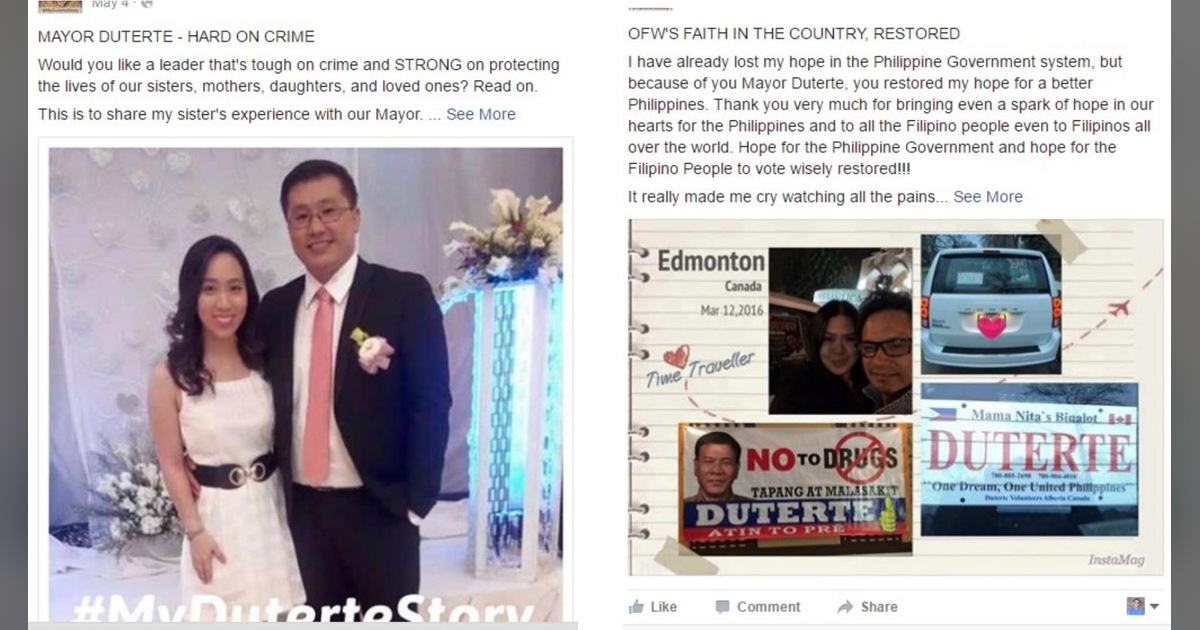
- Photo Posts: Images with high-impact emotional captions.
- Visual Memes: Personal anecdotes turned into shareable graphics.
- Organic Videos: Unfiltered testimonials shot on mobile phones.
Davaoeños shared stories of safety and improved quality of life. OFWs expressed pride in a leader from the south. These specific, varied stories were more powerful than any scripted campaign brief could ever produce.
Each of these stories was different. Each was specific. And each was, in its own way, more powerful than anything a copywriter working from a brief could have produced.
Executing a Successful Testimonial Campaign Strategy
A successful testimonial campaign strategy requires three critical elements:
- Thematic Direction: We provided the frame without scripting the words.
- Strategic Amplification: We identified high-traction posts and boosted them to increase reach.
- Trust in Networks: Local coordinators drove the conversation using indigenous authorship.
First, we gave clear thematic direction without dictating content. We communicated the kind of stories we were looking for — personal encounters, Davao testimonials, governance observations — without scripting what those stories should say. The direction was the frame. The content was the people’s.
Second, we identified and elevated the best content. When a post was generating genuine traction — real engagement, real shares, real conversation — we boosted it. We didn’t invent virality. We recognized it and amplified it.
Third, we trusted the regional networks to know their own communities. A coordinator in Mindanao understood what would resonate with a Mindanaoan audience far better than any Manila-based strategist. Localization wasn’t a translation exercise — it was indigenous authorship.
We didn’t invent virality. We recognized it — and amplified it.
Applying the MyDuterte Story Campaign Case Study
Every brand has supporters with unique stories to tell. The lesson of this MyDuterte story campaign case study is simple: build systems that surface and celebrate these voices. Authentic advocacy does work that no advertising budget can replicate.
The MyDuterte Story campaign was not a content strategy in the conventional sense. It was an invitation — open, generous, and trusting — for people to speak their own truth.
The response told us everything we needed to know about the power of giving your audience a voice.
Previously: Post 08 — How social media democratized narrative making → Next: Post 10 — 10 lessons every digital strategist should know →