Series: Inside the Campaign
Sixth of 10 Parts
Key Takeaways
- Engagement metrics are not the same as real-world impact — this distinction cost other campaigns dearly
- We used a three-stage framework: Arouse (emotion), Organize (structure), Mobilize (action)
- Online groups were aligned into four clusters: OFWs, Luzon, Visayas, and Mindanao — each with a coordinator
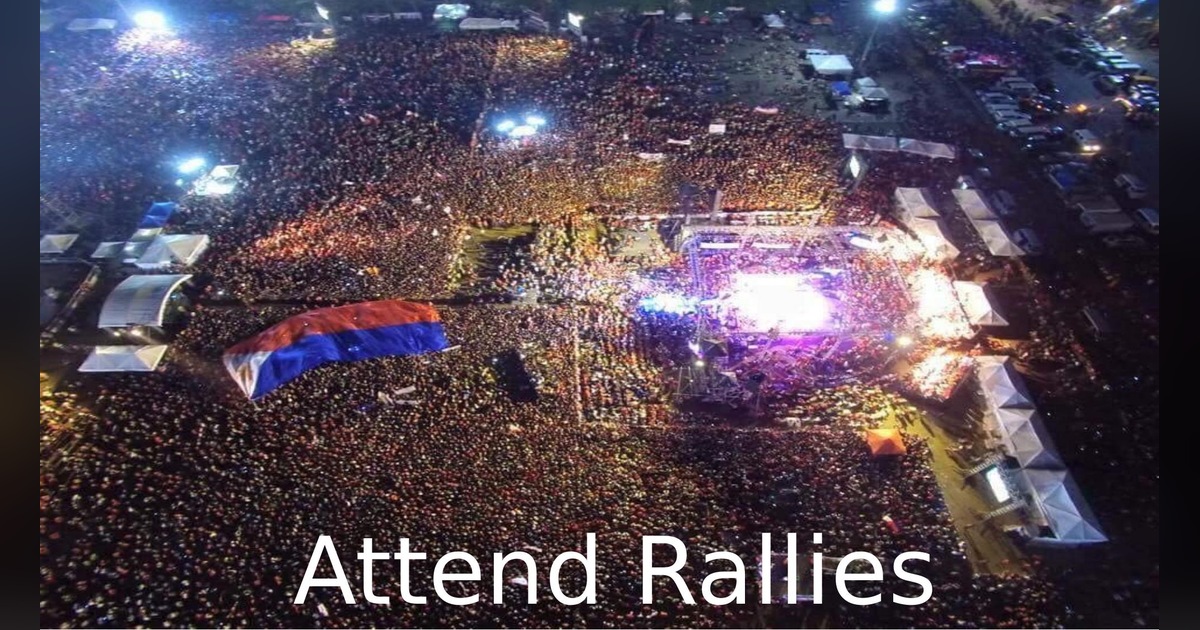
- Mobilization meant rallies, door-to-door, debate watch parties, and ballot guardianship
- The lesson: social media is the recruitment channel, not the campaign itself
There is a trap in social media campaigning that I’ve seen consume well-resourced campaigns with sophisticated tools and impressive metrics: the trap of confusing engagement with action.
Likes are not votes. Shares are not door-to-door visits. Passionate comment threads are not guardians of the ballot. And a Facebook group with ten thousand members is not an organization — it is a potential organization, waiting to be activated.
When I took over the social media component of the Duterte campaign, this was the first thing I had to confront. We had extraordinary energy online. Thousands of people across the country and among OFW communities abroad were posting, arguing, creating, and spreading the message. They were motivated and they were vocal.
But motivation without structure dissipates. We needed to build something that could actually deliver votes on May 9.
The framework: Arouse, Organize, Mobilize
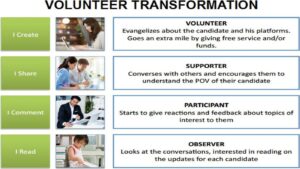
This is the framework I brought to the campaign — one that draws on community organizing principles as much as digital strategy.
Arouse means engaging the emotions and the intellect of your audience. This is where most campaigns begin and end. Stir feeling. Generate content that resonates. Build a sense of common identity and shared purpose. We did this through the MyDuterte story campaign, through regional identity messaging, through clear and emotionally powerful positioning.
But arousal without organization is just noise.
Organize means taking that aroused community and giving it structure. We aligned our fragmented online groups into four main clusters: OFWs, Luzon, Visayas, and Mindanao. Each cluster had a coordinator. Each coordinator had a role and a reporting line. The chaos of a thousand different Facebook pages and chat groups became, gradually, something that could be directed.
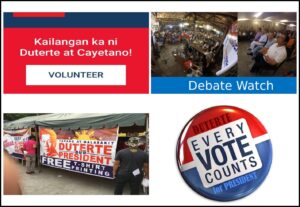
Mobilize means converting organized supporters into actors. This is the hardest part. It means asking people to do things that are harder than posting — to show up at rallies, to go door to door, to watch the debates together and discuss them, to print and wear the shirts, and on election day, to vote and to watch the count.
The final step — guardians of the ballot — was perhaps the most important. An election can be won in the campaign and lost at the count. We needed people who were committed enough to stay.
The digital-to-ground conversion
The key insight here is that social media is not the destination — it is the recruitment channel. The real campaign happens in communities, at doors, in conversations between neighbors.
Social media gave us reach. Organization gave us depth. Mobilization gave us results.
An audience follows. A community participates. An organization delivers.
What this means for you
If you are running any kind of campaign that requires real-world action — a product launch, a community initiative, a political movement, a brand advocacy program — ask yourself whether your online community is truly organized or simply aggregated.
The path from audience to organization requires intentional design. You need coordinators, not just administrators. You need calls to action that go beyond the screen. You need a theory of how online energy converts to offline impact.
We built that in the Duterte campaign. It wasn’t perfect. It was often messy. But it worked.
FAQ
Q: How do you identify who should be coordinators in a volunteer network?
A: Look for the people who are already doing it — the ones who are naturally moderating group discussions, creating content without being asked, and responding to others’ questions. They’re not hard to find. They self-select.
Q: How do you keep a large volunteer network aligned without making it feel top-down?
A: We communicated the message priority weekly — the theme and the direction — and then gave complete creative freedom within that frame. People feel ownership when they build things themselves. The frame is the guardrail; the content is theirs.
Q: Does the AOM framework apply outside political campaigns?
A: Yes — it’s essentially a community activation model. Brand communities, advocacy organizations, NGOs, even company culture initiatives benefit from the same three-stage thinking. The goal is always the same: convert passive support into active contribution.
Previously: Post 05 — Let a hundred flowers bloom → Next: Post 07 — How to run a national campaign with almost no budget →
————————————————————————————————–
Nic Gabunada is a veteran communications strategist who served in the Communications Group of the Duterte Presidential Campaign. He managed TV, radio, and social media strategy for the 2016 election. He writes about digital strategy, political communications, and the future of media. You may contact him via the following details: Email: nicgabjr@gmail.com and X:@nicgabunada