
Introduction
After four decades in marketing and PR, observing and participating in campaigns, managing narratives, reading survey data, and watching political cycles rise and collapse, one lesson becomes clear: timing is rarely accidental.
Context and Timing
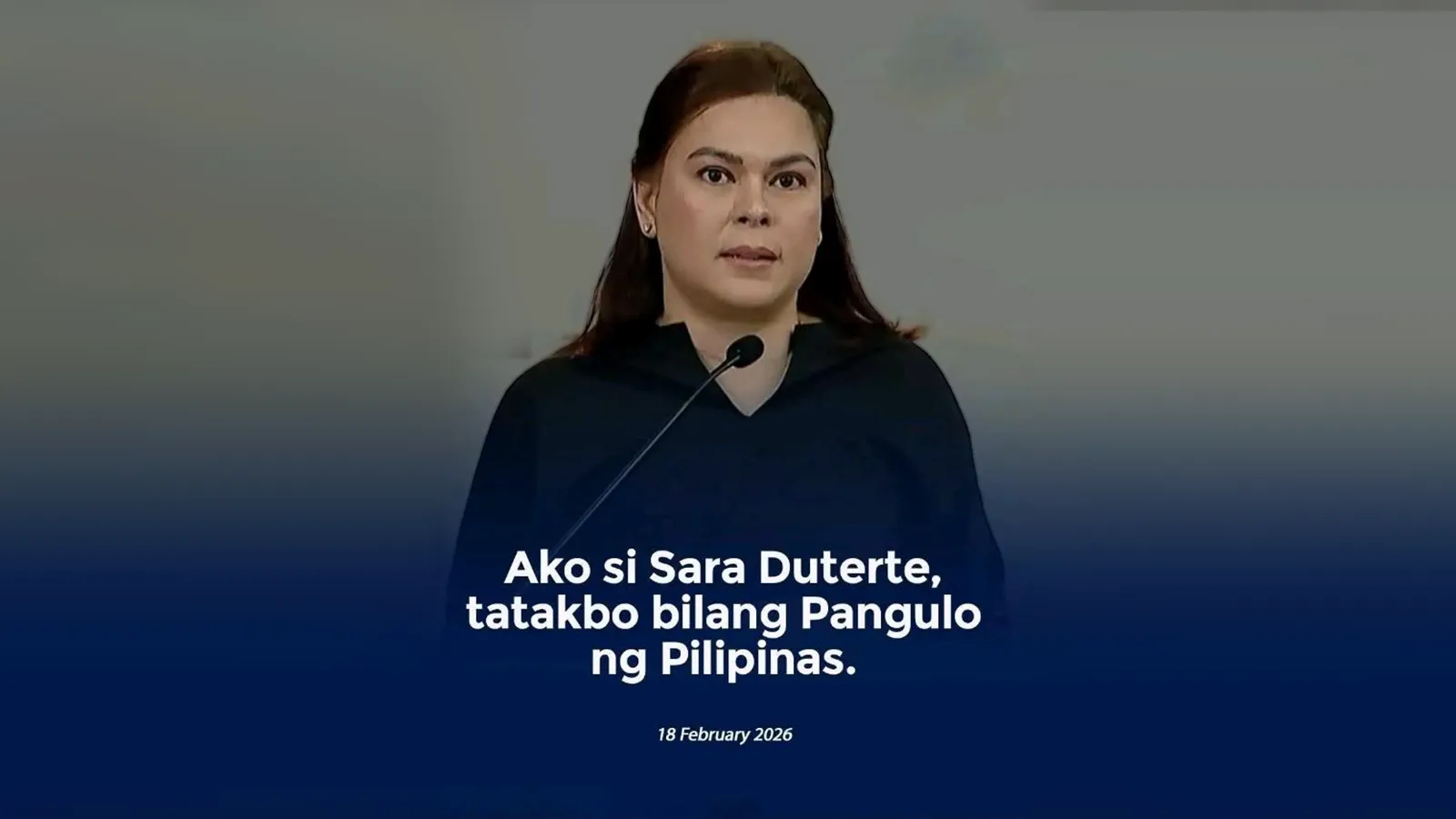
On February 18, 2026, Sara Duterte declared her candidacy for president. While the announcement itself was expected, the timing caught many by surprise.
Declaring amid an active impeachment effort was not an act of theatrical defiance—it was a deliberate structural repositioning.
Political and Structural Shifts
In market research, perception frames outcome. In political communications, context determines interpretation. Before her declaration, impeachment could be discussed as a legal matter. After her declaration, it became inseparable from the electoral picture. That shift matters.
Once a public official becomes a declared presidential candidate, especially one leading national surveys, every institutional action involving that official acquires electoral meaning.
Legislators understand this instinctively. They do not think in headlines. They think in districts, voter behavior, turnout models, coalition durability, and risk exposure.
An impeachment vote under ordinary circumstances is procedural. An impeachment vote against a declared frontrunner is political capital expenditure. That distinction changes behavior.
Patterns of Political Alignment
Over my long career, I have seen the same pattern repeat: politicians align not with noise, but with viability. Viability is measured in surveys, funding capacity, ground machinery, and emotional connection with voters. When those indicators converge, alignment accelerates.
By declaring early (two years before the formal filing season) Sara Duterte compressed the alignment window. Instead of allowing legislators to wait for late-cycle clarity, she forced immediate sorting. Every committee vote, every endorsement, every hesitation is now recorded in a context voters will remember.
This is not about intimidation. This is a design of incentive architecture.
Electoral Calculations and Survival
Political actors are rational within their survival framework. Representatives from regions where Duterte support remains strong must now calculate whether advancing impeachment strengthens or weakens their own re-election prospects. That calculation is not ideological but empirical.
From a communications standpoint, the move also reframes narrative risk. If the impeachment advances, it risks reinforcing a persecution storyline among her base. If it falters, it reinforces durability. Neither outcome leaves the process politically neutral.
Conclusion
Needless to say, none of this guarantees victory in 2028. Philippine politics is fluid, and momentum shifts. “It is the art of the possible,” as they say. But structurally, the declaration altered the cost-benefit equation for every actor involved. The cards have been dealt. Now we watch them play their hands.
Strategic politics is rarely loud. It is often about forcing others to reveal their positions sooner than they intended.
On February 18, the timeline moved forward. And when timelines move, behavior follows.
Email: nicgabjr@gmail.com X: @nicgabunada