I still remember the first time someone told me, without a trace of irony, that horses had once settled a blood debt between two families in the uplands of Mindanao. Not a payment of cash. Not a formal apology delivered by elders. Horses — walked from one household to another, accepted as full and final restitution for a life lost. Growing up hearing stories like this, I assumed it was folklore, the kind of detail that gets embellished with every retelling. It wasn’t. Among the Lumad and upland farming communities of Mindanao, a horse has never just been an animal. It has been currency, dowry, peace offering, and proof of a man’s standing in his community — all at once.
That’s the world I want to take you into today: a tradition so deeply woven into Mindanao’s social fabric that it shaped marriages, resolved wars between clans, and filled town plazas with roaring crowds — and one that Philippine law has now pushed to the margins.
A Horse Is Never Just a Horse
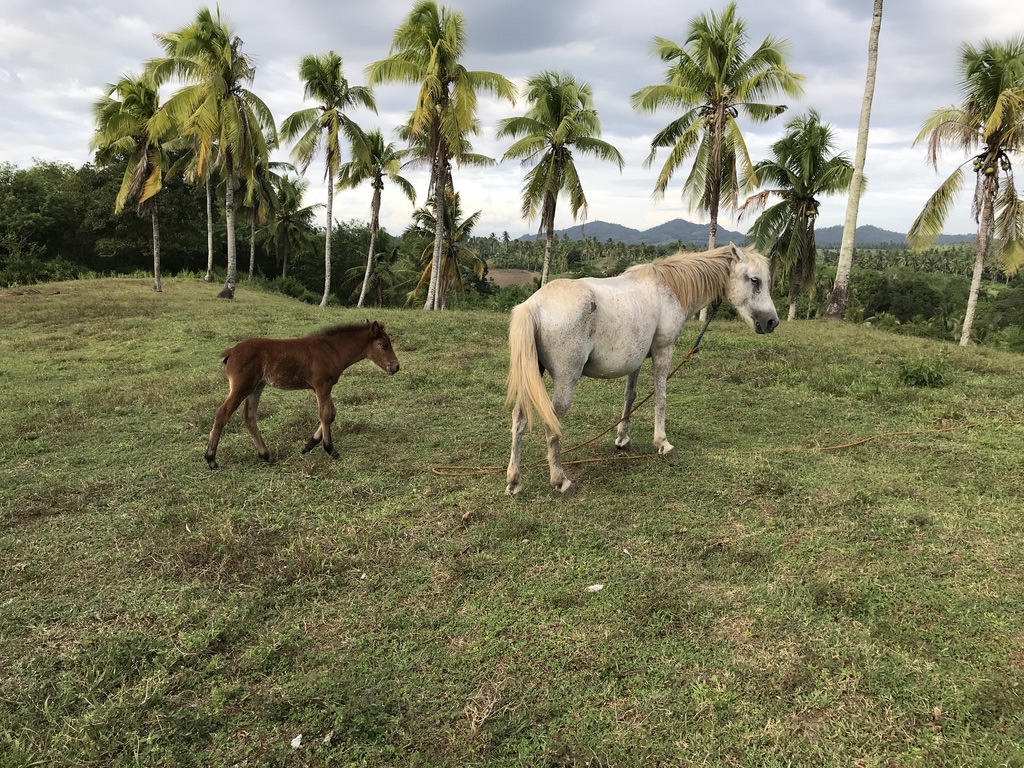
In lowland Filipino culture, wealth gets measured in land titles, tricycles, or how many sacks of rice you can store before the next typhoon season. In the uplands, among Lumad communities, the measure has traditionally been simpler and far more visible: how many horses does a man own, and how good are they?
This wasn’t vanity. A horse in these communities did real work — hauling crops down mountain trails to lowland markets, carrying people across terrain no tricycle or habal-habal could survive. But its value went well beyond labor. Horses functioned as a medium of exchange, standing in for money in transactions that mattered most: a bride price paid to a woman’s family, a settlement offered to end a blood feud, a gift presented to cement peace between families who had been at war for generations. In a region where formal banking has always been thin on the ground, the horse was liquid, portable, and universally understood wealth — the upland equivalent of gold.
And within that horse economy, not all animals were equal. Pedigree and price were only part of the story. The animals that mattered most were the ones that had proven themselves in the ring.
Inside the Pen: How a Horse Fight Actually Worked
If you’ve never seen one, picture something between a cockfight and a bull run, minus the blades and minus the running crowd — but with all the same electricity. Organizers would build an enclosed pen at the center of the event. A mare in heat was tethered inside, which is the entire premise of the contest: two stallions, driven by instinct rather than training, would fight for the right to mate with her.
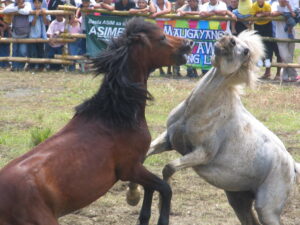
What followed was raw and unscripted. The stallions would push, shove, head-butt, bite, and kick, each trying to force the other into submission or out of the ring entirely. There was no referee calling holds or breaking clinches. A stallion lost the moment it bolted past the ring’s boundary, or the moment its owner — watching his investment take a beating — decided enough was enough and threw in the towel. In the more traditional versions of the event, the winning stallion was allowed to breed with the mare, which meant the fight wasn’t just about pride. It was about bloodlines, breeding rights, and the next generation of horses that would carry a family’s reputation forward.
And people watched. Not politely, either — festivals could draw crowds in the hundreds or thousands, with betting circling the ring the same way it does at a cockpit, money changing hands as fast as the fight itself unfolded. Events like the T’boli’s Lemlunay Festival in South Cotabato, the Dorong Festival in Digos, Davao del Sur, various town fiestas across North Cotabato, and even Davao City’s flagship Kadayawan Festival once featured horse fights as marquee attractions — not sideshows, but centerpieces that pulled in crowds the way a headline act would at a modern concert.
Where Culture and Law Now Collide
Here’s where the story gets complicated, and where I think it deserves more nuance than it usually gets.
Republic Act 8485, the Animal Welfare Act of 1998 — later strengthened in 2013 by RA 10631 — explicitly prohibits subjecting any dog or horse to organized fighting. Cockfighting remains legally exempt, carved out under its own long-standing regulatory framework, but horse fighting was not given the same protection. Local governments have, in the years since, largely stopped sanctioning horse fights as official fiesta events. Some communities have complied outright. Others haven’t — and continue holding fights quietly, arguing that the tradition is inseparable from their cultural identity and pointing, not unreasonably, at the double standard: if cockfighting is legal, why isn’t this?
I don’t think there’s a clean answer here, and I’m not going to pretend there is one. What I do think is worth saying is this: laws written in Manila don’t always account for what a tradition means on the ground in Mindanao’s uplands. I once took a video of a horsefight during a Kadayawan festival in 2004. I posted it on YouTube. But later, the platform removed it — flagged as animal cruelty. I understood the platform’s reasoning. But there was also a quieter loss in it — not just a video taken down, but a piece of Lumad memory pulled offline before most people even knew it existed. Two things can be true: that animal welfare concerns are legitimate, and that a centuries-old cultural practice doesn’t disappear just because a law or a platform’s content policy says it should.
Why This Story Still Matters
Horse fighting in Mindanao was never really about the fight itself. It was about status earned honestly, debts settled without bloodshed, marriages sealed with something more meaningful than paperwork, and ridos ended with a gift instead of another grievance. Whatever you think about the practice today, understanding it means understanding how Lumad and upland communities have historically built peace, wealth, and social order without needing a bank, a courtroom, or a government office to referee it for them.
That’s a legacy worth documenting — even, maybe especially, as the practice itself fades from Mindanao’s festival calendars.
_____________________________________________________________________________________________________________________
Keep This Conversation Going
If stories like this one resonate with you — the kind that connect family history, regional identity, and the quiet resilience of tradition — subscribe so you don’t miss the next one. And if you or your family have a horse-fighting story, a Lumad tradition, or a piece of upland Mindanao history you think deserves to be told, reach out and share it with me. These stories only survive if we keep telling them.
Email: nicgabjr@gmail.com X:@nicgabunada