
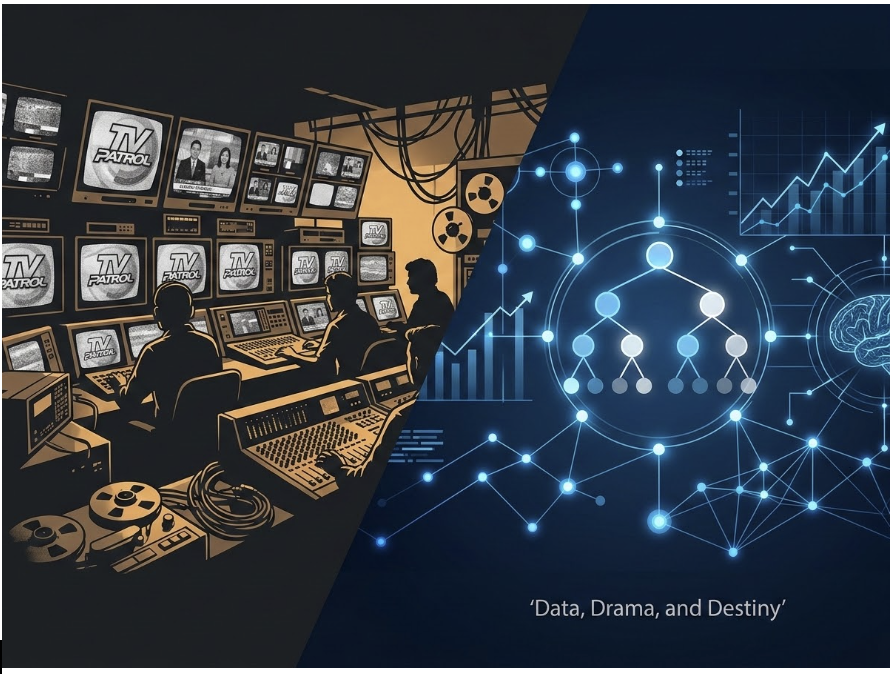
The Media Landscape of the Early 90s
The late 80s and early 90s were a simpler time for the industry—or so it seemed. Back then, there was no distinction between “social” and “mainstream” media; there was simply the media. At the heart of this landscape stood the giant of Philippine broadcasting history: ABS-CBN.
Fresh from its post-martial law revival, the network was fighting to regain its footing. I was fortunate enough to be in the trenches during this high-stakes ABS-CBN resurgence.
The Power of Data-Driven Strategy
In 1990, I was recruited by the legendary Mr. Freddie Garcia—better known as FMG—to lead the research and business analysis team. In an era often driven by gut feel, I was a firm believer that data-driven decision making was the secret sauce for organizational success.
FMG didn’t just want numbers; he wanted actionable insights. We had to “sell” every recommendation to management, monitor the implementation, and report the cold, hard results. This end-to-end process shaped my perspective as a strategist: data isn’t just for the archives; it’s for the arena.
The TV Patrol Success Factors
One of my proudest achievements was spearheading the format changes for TV Patrol. By leveraging viewer analytics, we identified the specific TV Patrol success factors that turned the program into a cultural juggernaut and cemented ABS-CBN’s status as a broadcast leader.
If you’re a digital strategist or PR pro, you’ll find my deep dive into TV Patrol’s early years and its shift in strategy particularly relevant. It’s a masterclass in how localized content can disrupt an entire market.
Lessons from the Marimar Challenge
Success is rarely a straight line. By the mid-90s, the greatest threat to our dominance wasn’t a rival news program—it was a happy-go-lucky Latina and her talking dog. Marimar had arrived.
The rise of the telenovela was the first serious challenge to TV Patrol’s supremacy. Its massive popularity exposed our structural shortcomings, forcing us to pivot immediately.
Our counter-programming wasn’t just a reactive move; it was a calculated risk informed by research. Needless to say, it worked. ABS-CBN didn’t just survive the influx of foreign content—it thrived by evolving.
A Legacy of Resilience
Looking back, that era of Philippine broadcasting feels like a different world, yet the lessons remain timeless for today’s marketers and political scientists. Data-backed agility is the only way to stay relevant when the “talking dogs” of disruption come barking.
The airwaves have changed, but the fundamental need for actionable intelligence hasn’t. I’ll always cherish those years at ABS-CBN—the front lines of a media revolution.